Joint Assembly of Officials and People and the Six Articles
Ministers and citizens met together at Jongno and adopted the Six Articles. Gojong accepted them and reorganized the Privy Council, but the Independence Club was soon dissolved.
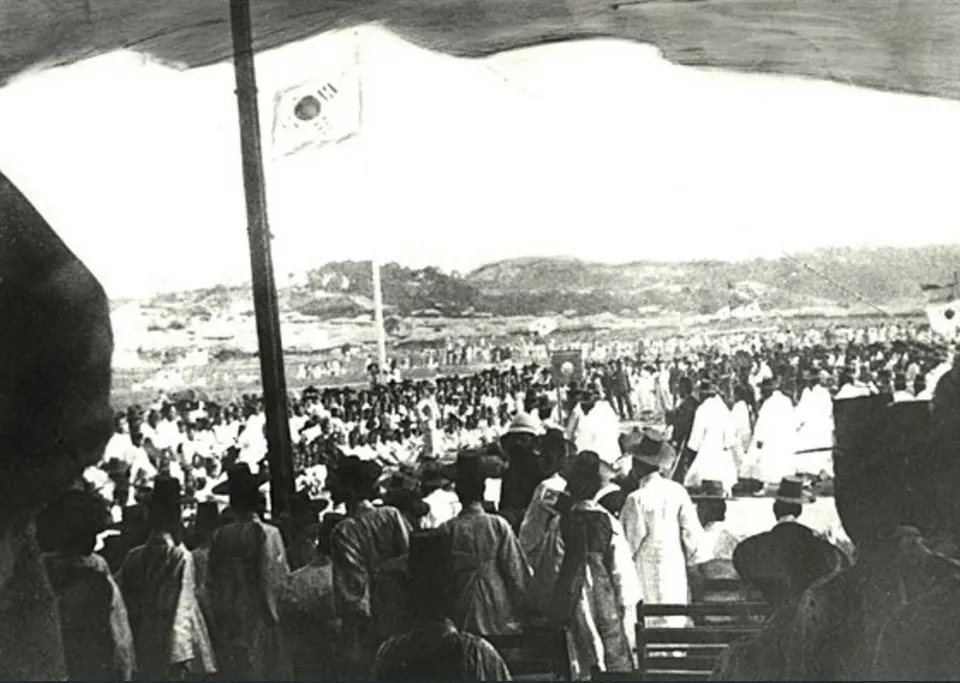
National Institute of Korean History · Public domain · Source
Acting prime minister Park Jeong-yang and other ministers sat alongside commoners — the opening speech was given by Park Seong-chun, a butcher of the outcaste class. The Six Articles called for (1) officials and people to unite and uphold imperial authority without relying on foreigners; (2) treaties and concessions to foreigners to be co-signed by the ministers and the chairman of the Privy Council; (3) all finances to be handled by the finance ministry with budgets and accounts made public; (4) public trials for serious crimes; (5) senior officials to be appointed by the emperor with the consent of a majority of the government; and (6) the regulations to be carried out.
Gojong accepted them and in November reorganized the Privy Council so that half of its fifty councillors would be chosen by the Independence Club — the movement for a parliament. But after the anonymous-placard affair the club’s leaders were arrested, and in December the club and the assemblies were forcibly dissolved.
