The Move to Heian-kyō and Kokufu Culture
Also called: Heian period, Kokufū culture
Emperor Kanmu moved the capital to Heian-kyō (Kyoto) in 794, opening the Heian period. After embassies to the Tang stopped in 894, a distinctly Japanese “national style” culture developed, written in the kana syllabaries.
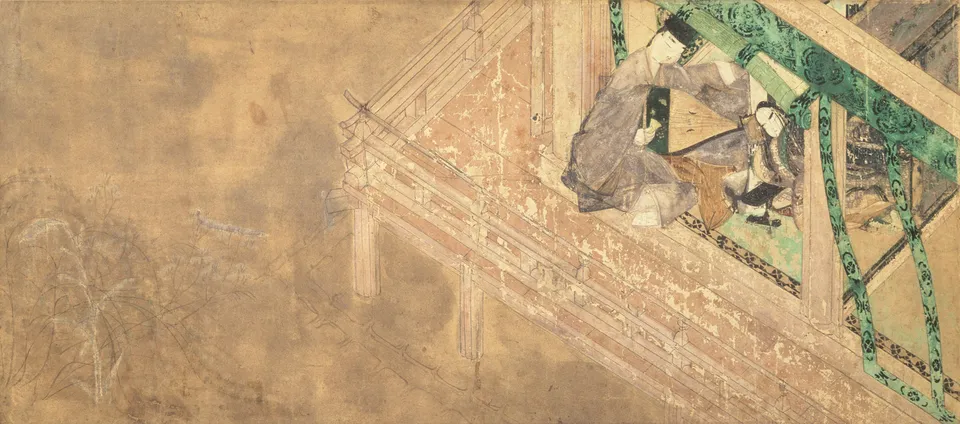
Imperial court in Kyoto. The handscroll had been said to be painted by Fujiwara, Takayoshi, though it is now presumed to be painted by several groups of painters in Heian period. · Public domain · Source
As the great temples of Nara meddled in politics, Emperor Kanmu moved the capital to Nagaoka-kyō in 784 and to Heian-kyō in 794 — again a grid city modelled on Chang’an. From the late 9th century the Fujiwara, as maternal relatives of the emperors, ruled as regents (sesshō and kanpaku), while nobles and temples expanded tax-exempt estates (shōen) and the codified order weakened.
With the Tang in turmoil, embassies were halted in 894 on the advice of Sugawara no Michizane. Building on the Tang culture it had absorbed, Japan developed a national-style culture of its own. Kana syllabaries simplified from Chinese characters (hiragana and katakana) came into wide use, producing kana literature such as the waka anthology Kokin Wakashū (905) and Murasaki Shikibu’s Tale of Genji (early 11th century). In the provinces warriors (bushi) who guarded the estates grew in power and would later found the Kamakura shogunate.