Hobbes, Locke and the Social Contract
Also called: Social contract theory, Leviathan, Two Treatises of Government
Hobbes in Leviathan (1651) and Locke in Two Treatises of Government (1690) argued that the state arises from a contract among the people. Hobbes drew from it a strong sovereign; Locke, natural rights and a right of resistance.
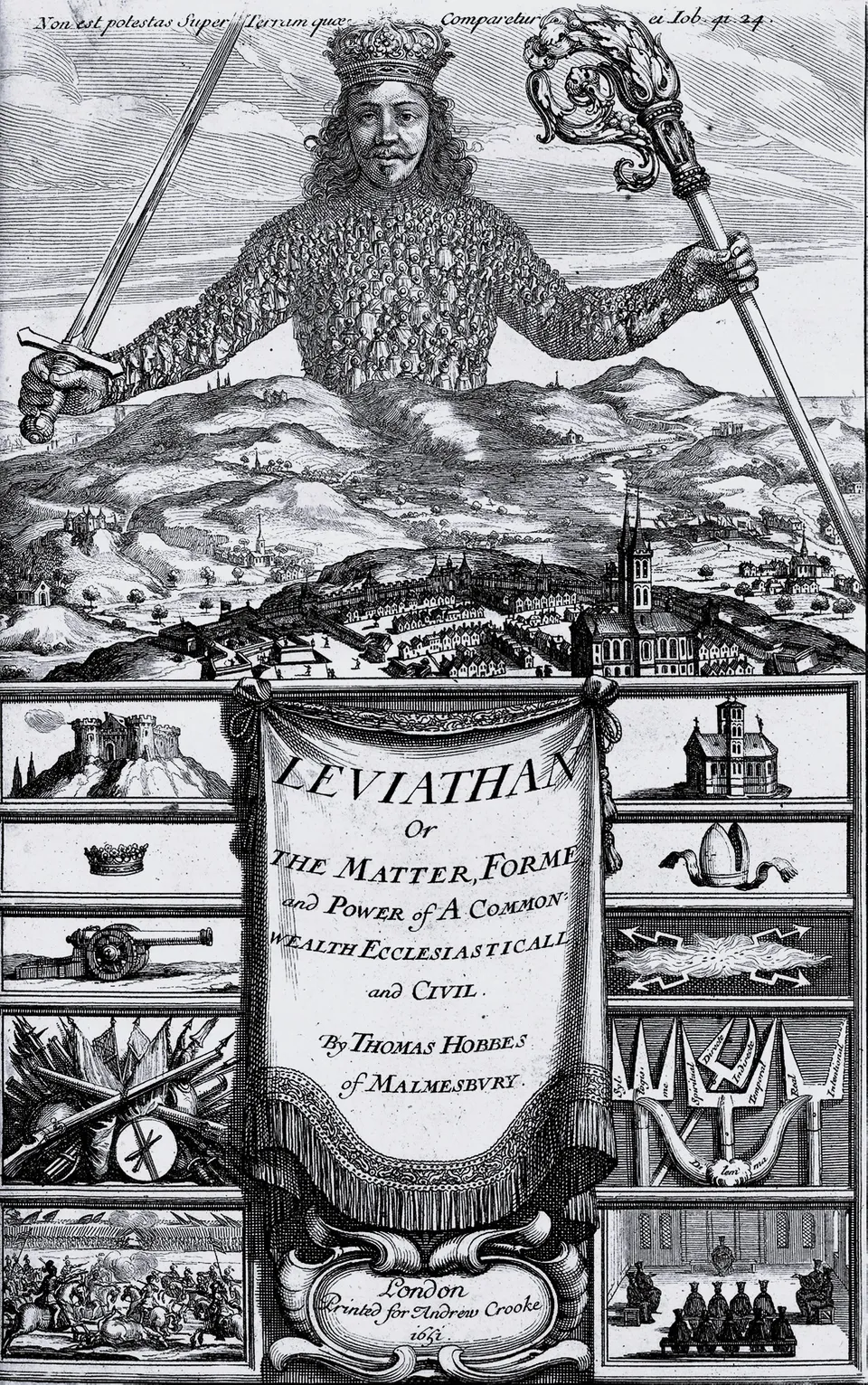
In an England that lived through the Puritan Revolution and the Glorious Revolution, social contract theory looked for the source of state power not in God but in an agreement among people. Hobbes, who had fled the civil war to Paris, described in Leviathan a state of nature without government as a “war of all against all”, in which people, seeking security, handed all their rights by contract to a sovereign. It was not divine right, but its conclusion defended absolute power.
In his Two Treatises of Government, published just after the Glorious Revolution, Locke held that people are born with the natural rights of life, liberty and property and set up government by consent to protect them. If a government violated those rights, the people could resist and replace it. This right of resistance justified the Glorious Revolution and later deeply influenced the American Declaration of Independence and the French Revolution.