Hwangnam Daechong, Gyeongju
Silla’s largest tomb, a double stone-mound wooden-chamber tomb. The northern mound held a gold crown, the southern one glass vessels from the West.
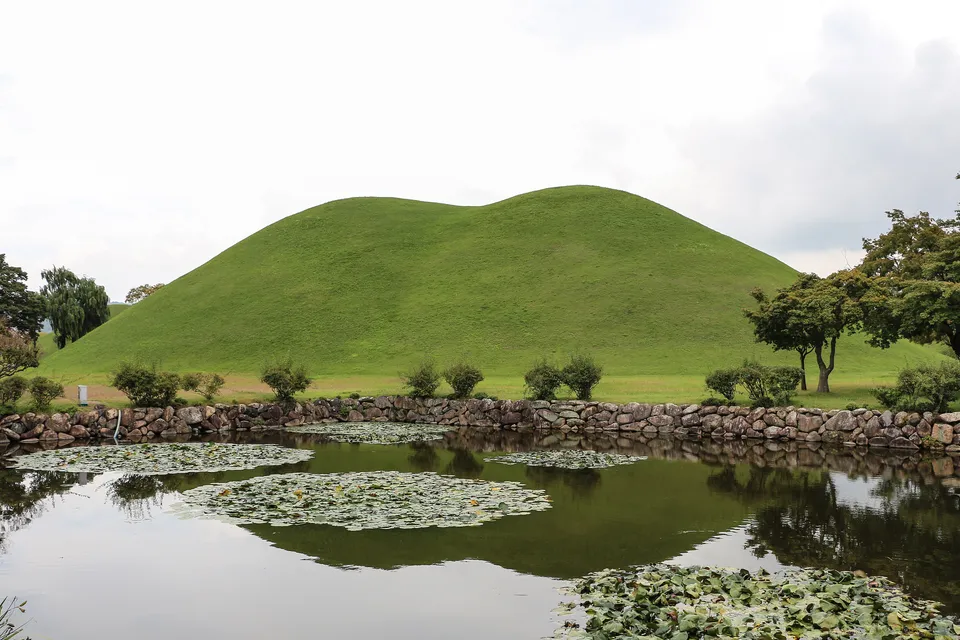
Tomb No. 98 in Daereungwon, Gyeongju, it runs 120 m north to south — the largest tomb of Silla. The southern mound was built first and the northern one joined to it, giving a gourd shape. A man (the king) lay in the south mound and a woman in the north; a gold crown and a belt ornament inscribed "Lady’s belt" mark the north mound as a queen’s tomb. It dates from the maripgan period, with Naemul or Nulji among the candidates.
As a stone-mound wooden-chamber tomb it was hard to rob, and tens of thousands of objects — gold crown and belts, a phoenix-head glass ewer — survived. The glassware shows contact with the Mediterranean and West Asia.