Insurrection of 10 August 1792
Also called: Storming of the Tuileries, September Massacres
The Paris crowd and provincial volunteers stormed the Tuileries Palace and defeated the Swiss Guards; the king was suspended and the monarchy fell.
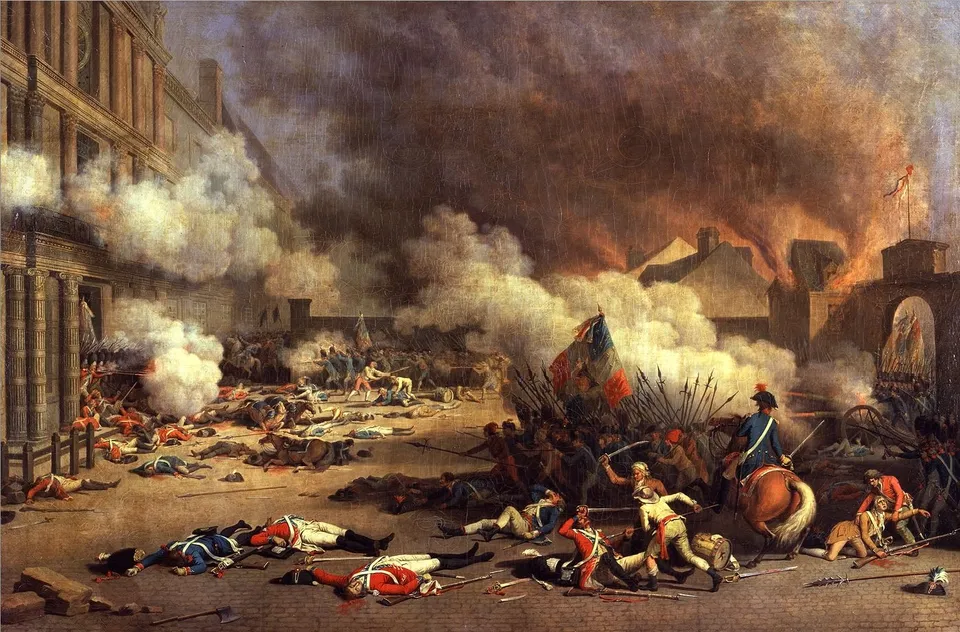
Jacques Bertaux · Public domain · Source
As the war went badly and suspicion grew that the king was in league with the enemy, the sections of Paris set up a new insurrectionary Commune and demanded his removal. On the morning of 10 August 1792 sans-culottes and volunteers (fédérés) from Marseille and Brittany marched on the Tuileries. The royal family took refuge in the nearby Assembly, and in the fight with the Swiss Guards defending the palace several hundred guards and several hundred attackers were killed.
The Assembly suspended the king, imprisoned the family in the Temple tower and called elections by universal male suffrage for a new assembly, the National Convention. In early September, amid panic at the approaching enemy, over a thousand prisoners in the Paris jails were massacred (the September Massacres).