Iphigenia at Aulis
Also called: Sacrifice of Iphigenia, Iphigeneia
A legend handed down over the centuries.
A Greek myth told in the Cypria and the tragedies of Aeschylus and Euripides. When Artemis in her anger stilled the winds and held the Greek fleet at the harbour of Aulis, Agamemnon sacrificed his daughter Iphigenia.
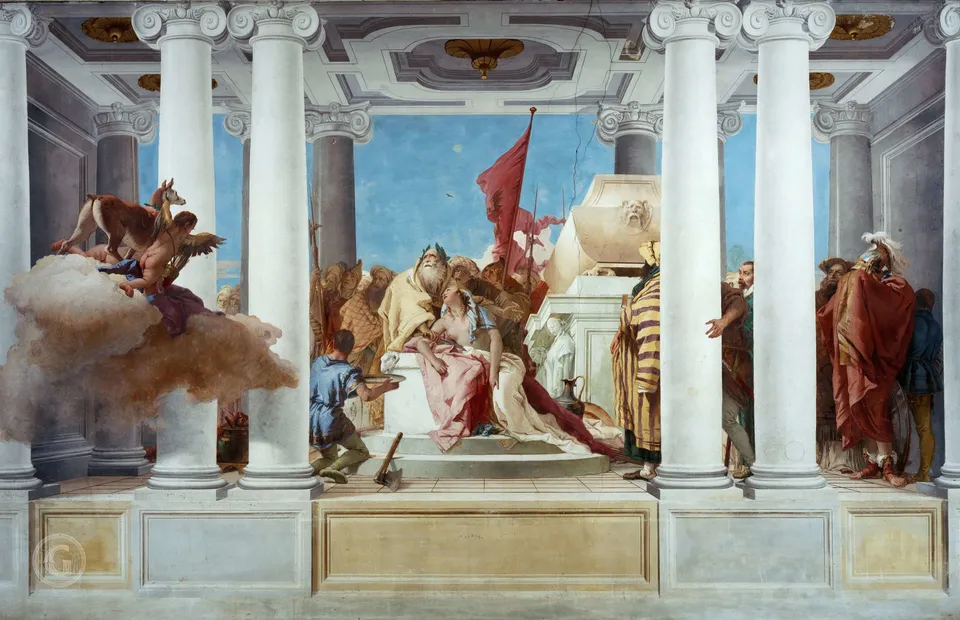
Giovanni Battista Tiepolo · Public domain · Source
This Greek myth is told in the Cypria (in summary), Aeschylus’ Agamemnon and Euripides’ Iphigenia at Aulis, among others; it does not appear in the Iliad. The Greek fleet gathered at Aulis in Boeotia, but Agamemnon had killed a deer of Artemis and boasted of it, and the angry goddess stilled the winds. The seer Calchas declared that the fleet could sail only if Agamemnon sacrificed his daughter Iphigenia, and Agamemnon summoned her on the pretext of marrying her to Achilles.
The endings differ. In the Cypria and in Euripides, Artemis substitutes a deer for Iphigenia on the altar and carries her off to Tauris north of the Black Sea. In Aeschylus she dies, and in revenge her mother Clytemnestra kills Agamemnon when he returns from Troy.