Japanese Annexation of Korea
Also called: Japan–Korea Annexation Treaty
On 29 August 1910 Japan forcibly annexed the Korean Empire, proclaiming the treaty it had forced through on 22 August and beginning 35 years of colonial rule.
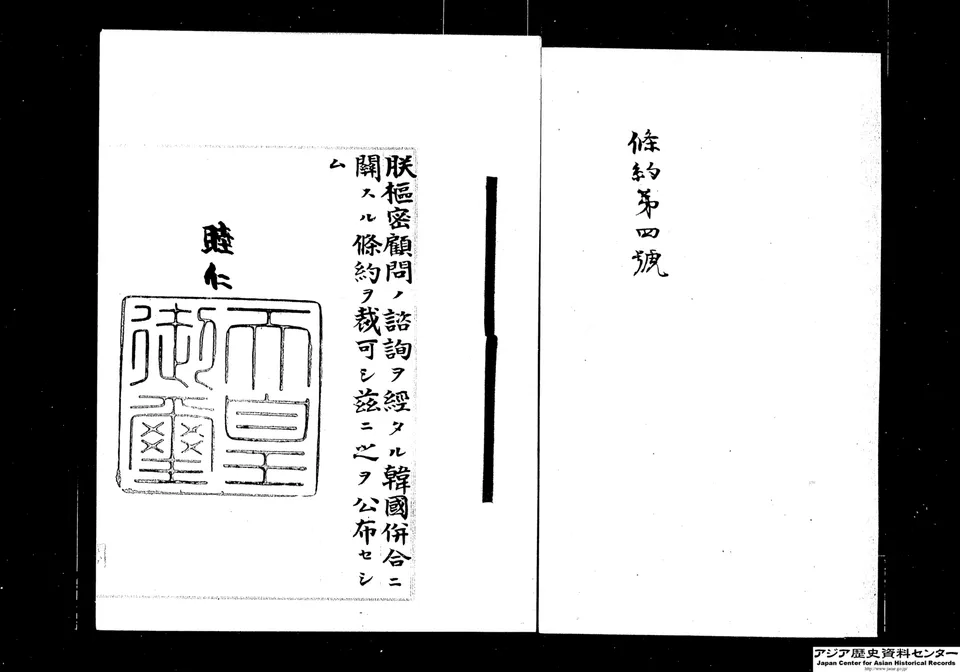
Empire of Japan, Korean Empire · Public domain · Source
After the Russo-Japanese War Japan stripped Korea of its foreign affairs by the Eulsa Treaty (1905), its internal administration by the 1907 treaty, its judiciary by the Giyu memorandum (1909) and its police in June 1910. When Ahn Jung-geun killed Itō Hirobumi at Harbin in 1909, Japan hurried annexation, and the collaborationist Iljinhoe petitioned for a merger.
Terauchi Masatake, made Resident-General in 1910, reinforced the military police and on 22 August signed the annexation treaty with Prime Minister Lee Wan-yong, waiting until 29 August to announce it. The Korean Empire ended, the country was renamed "Joseon", and in October the Government-General of Korea replaced the Residency-General. Because Emperor Sunjong’s signature is missing, among other procedural flaws, there is a view that the treaty is void.
Hwang Hyeon took his own life after writing his death poems, and many patriots crossed into Manchuria and the Maritime Province to build bases for the independence movement. 29 August is remembered as the Day of National Humiliation.