Spread of Rice Transplanting and Rural Markets
In late Joseon rice transplanting spread nationwide, allowing rice–barley double cropping and large-scale farming; farmers grew cash crops such as ginseng and tobacco, and periodic markets grew to over a thousand.
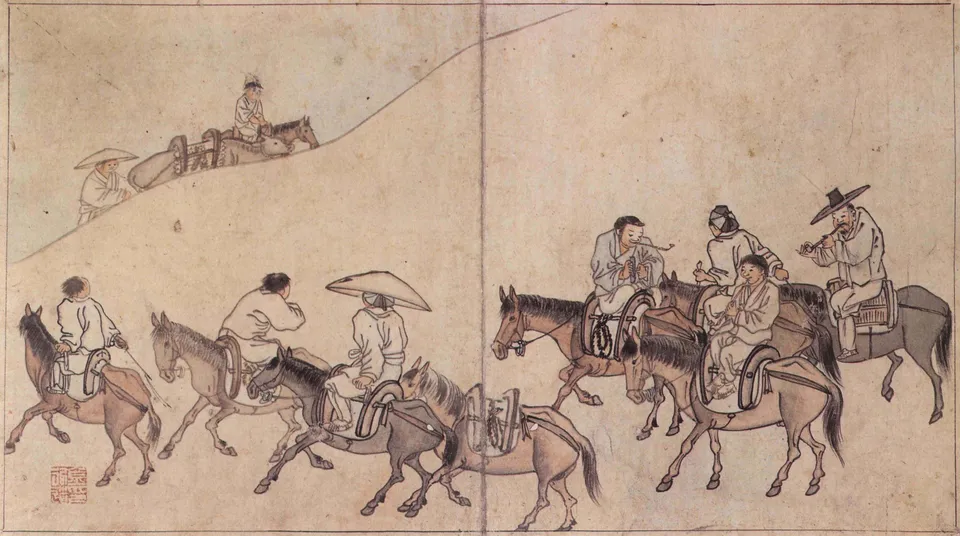
Kim Hong-do · Public domain · Source
Agriculture: transplanting cut weeding labour so sharply that one household could farm far more land (gwangjak), and paddies could carry barley after rice. On dry fields, sowing in furrows spread. Farmers grew ginseng, tobacco, cotton and vegetables for sale, and fixed rents began to replace half-share rents in places. Some farmers grew rich while many lost their land and became wage labourers.
Commerce: periodic markets, first seen in Jeolla in the late fifteenth century, numbered over a thousand by the mid-eighteenth, most meeting every five days and served by itinerant peddlers (bobusang). The Song merchants of Gaeseong ran branch shops and dealt in ginseng; the Man merchants of Uiju traded with Qing and the Nae merchants of Dongnae with Japan; the Gyeonggang merchants shipped grain on the Han. At river and sea ports, gaekju and yeogak brokers provided lodging, brokerage and credit.
Crafts and mining: private workshops multiplied, and merchants began advancing capital to artisans. Mines were opened to private operators who paid tax (from 1651), and managers (deokdae) financed by merchant capital hired miners.