The Thirteen Altars of Lavinium and the “Heroon of Aeneas”
Also called: Thirteen Altars, Heroon of Aeneas, Pratica di Mare
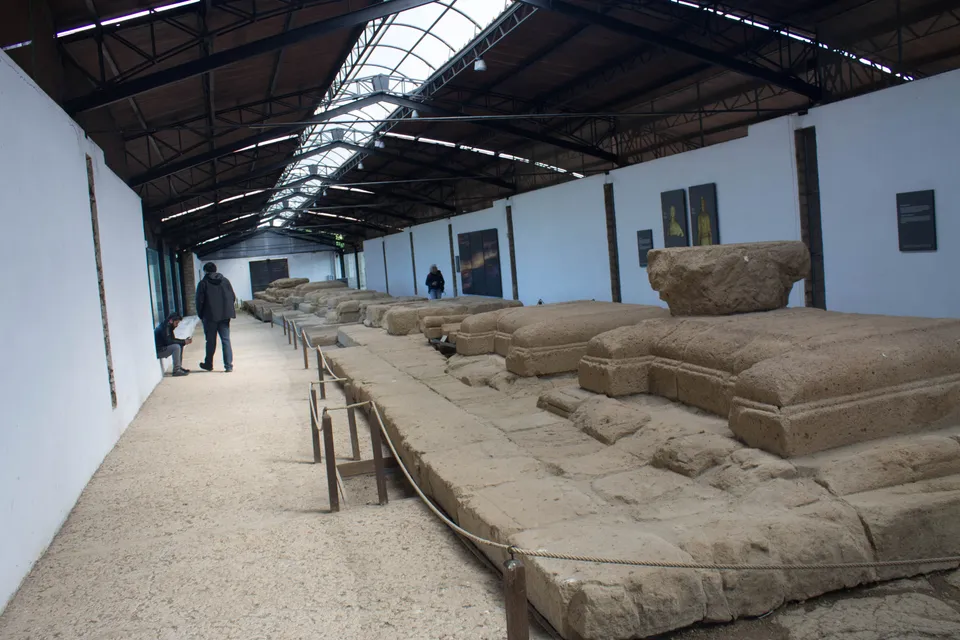
At Pratica di Mare (ancient Lavinium) south of Rome, excavations revealed a sanctuary with thirteen large altars in a row, added one after another from the 6th to the 4th century BC, and a 7th-century BC burial mound converted in the 4th century BC into a hero’s shrine. Its identification as a shrine of Aeneas is disputed.
Saverio.G · CC BY-SA 4.0 · Source
The village of Pratica di Mare in today’s Pomezia, about 30 km south of Rome, stands on the site of the ancient Latin town of Lavinium. Excavations from the 1950s by Ferdinando Castagnoli and others of the University of Rome uncovered, south of the village, a sanctuary with thirteen tufa altars aligned north to south. The earliest dates from the 6th century BC, and the others were added down to about the 4th century (some say the 2nd); a fourteenth altar was later found. It is thought to have been a cult place shared by several Latin towns, and the sanctuary of Minerva yielded a mass of terracotta votive statues.
About 100 m from the altars, a 7th-century BC burial mound some 18 m across was excavated in 1955–1956. More than sixty grave goods — weapons and silver and bronze vessels among them — were found, and in the 4th century BC a square chamber with a tufa door was added, turning the tomb into a hero’s shrine (heroon). The excavators identified it with the shrine of Aeneas near Lavinium described by Dionysius in his Roman Antiquities, but many scholars no longer accept this.
Even so, the site shows that by the 4th century BC, as Rome grew in power, Lavinium was regarded as a holy place of the ancestor from Troy and of the Penates. The finds are in the Lavinium Archaeological Museum in Pomezia.