Growth of Medieval Towns and the Hanseatic League
Also called: Hanseatic League, Hanse, Guilds
After the 11th century, as farm output and long-distance trade grew, towns of merchants and craftsmen rose across Europe and won self-government from their lords, and the German towns of the North Sea and Baltic formed the Hanseatic League.
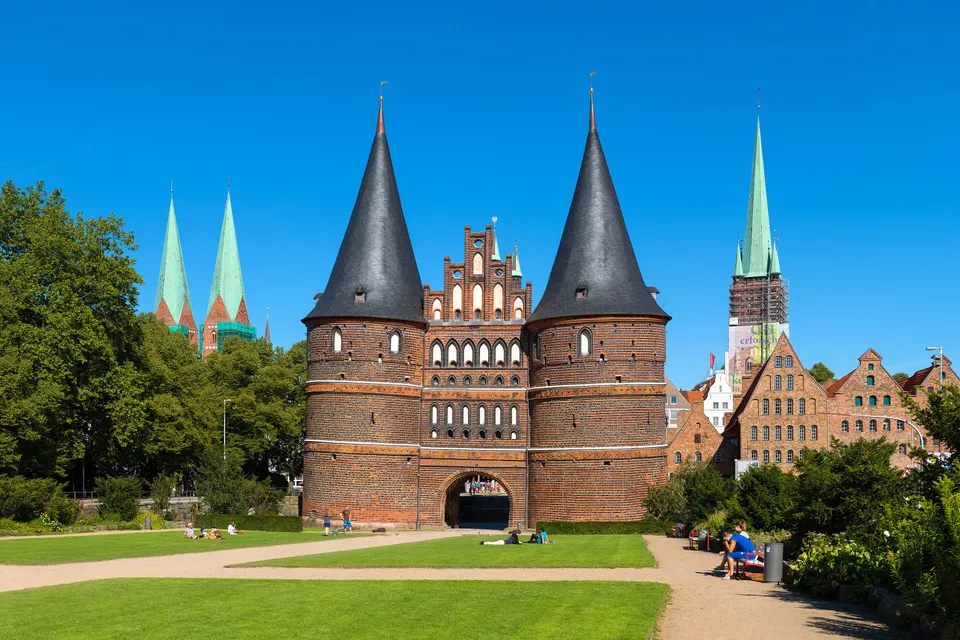
Christian Wolf ( www.c-w-design.de ) · CC BY-SA 3.0 de · Source
From the 11th century the three-field system and the heavy iron plough raised farm output, and the crusades stimulated trade with the East, reviving commerce. In the Mediterranean, Venice, Genoa and Pisa brought in eastern spices and silk; in the north, Flemish woollens and Baltic grain, timber and herring were traded; and between them great fairs were held in Champagne.
Towns grown rich on trade and crafts bought or fought for charters from their lords and enjoyed self-government. As the saying “town air makes you free” suggests, a serf who fled to a town and lived there a year and a day could gain his freedom. Merchants and craftsmen formed guilds to control production and prices, and craft guilds kept a hierarchy of masters, journeymen and apprentices.
The north German towns led by Lübeck formed the Hanseatic League, set up trading posts in London, Bruges, Bergen and Novgorod, dominated North Sea and Baltic trade, and in 1370 defeated Denmark. As the towns grew, the money economy spread and the manorial system weakened, and the townspeople became allies of the kings against the feudal lords. At the same time Song and Arab merchants were calling at Byeongnando, the port of Goryeo.