Mandates in West Asia
Also called: San Remo Conference, League of Nations mandates
After the war the Allies divided the Ottoman Empire’s Arab lands as League of Nations mandates: France took Syria and Lebanon, Britain Iraq, Palestine and Transjordan.
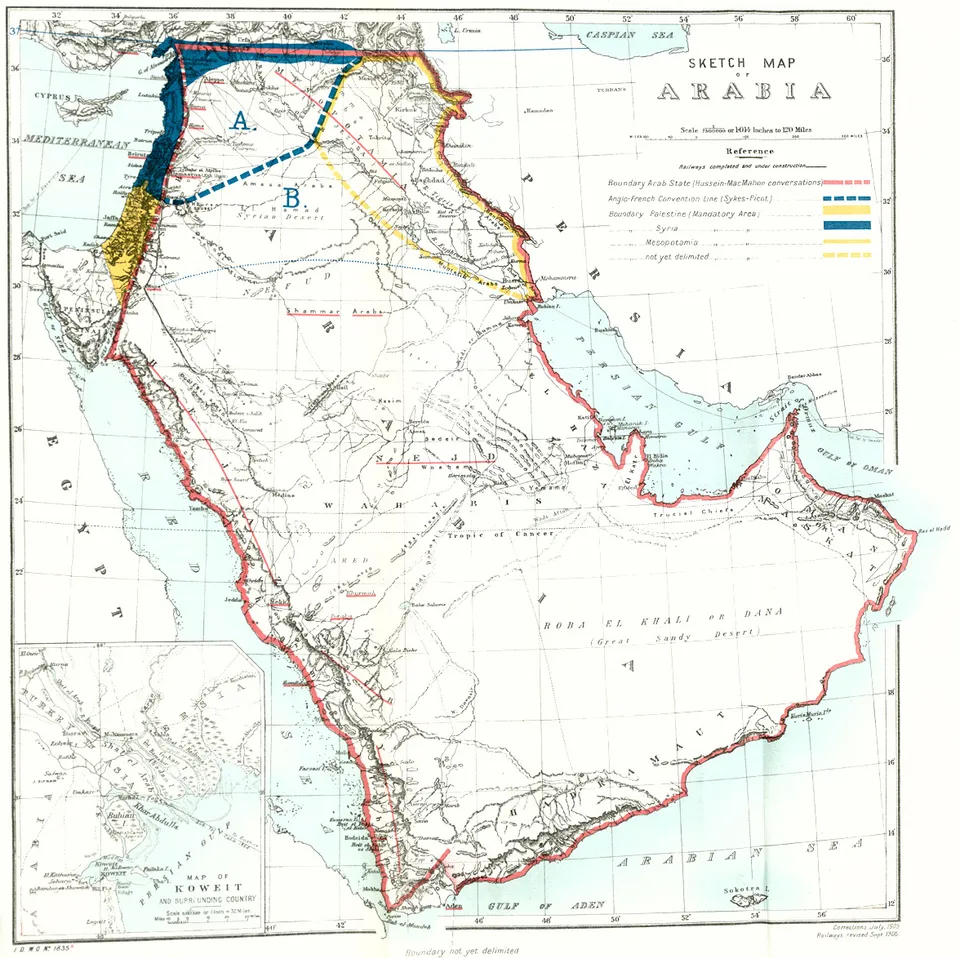
UK Government in 1921 · Public domain · Source
The League of Nations created the mandate system, under which "advanced nations" would look after the former colonies of the defeated powers until they could become independent. At the San Remo Conference in Italy in April 1920 Britain and France divided the Ottoman Arab lands: France was to take Syria and Lebanon, Britain Iraq (Mesopotamia) and Palestine. In effect this carried out a revised Sykes–Picot Agreement, and to the Arabs it was colonial rule under another name.
Resistance came quickly. Faisal, proclaimed King of Syria, was defeated by the French at Maysalun in July 1920 and driven out, and that summer a large revolt against Britain broke out in Iraq. At the Cairo Conference of 1921 Britain made Faisal King of Iraq and his brother Abdullah Emir of Transjordan, shifting to indirect rule. In Palestine, Jewish immigration under the Balfour Declaration grew and clashes with the Arab population sharpened (the Arab revolt of 1936–1939). The mandates became independent in turn: Iraq (1932), Lebanon (1943), Syria and Jordan (1946) and Israel (1948).