Monroe Doctrine
Also called: Monroe Doctrine of 1823
President Monroe declared that Europe should not interfere in the Americas and that the United States would stay out of European affairs. It protected Latin American independence and became a principle of US foreign policy.
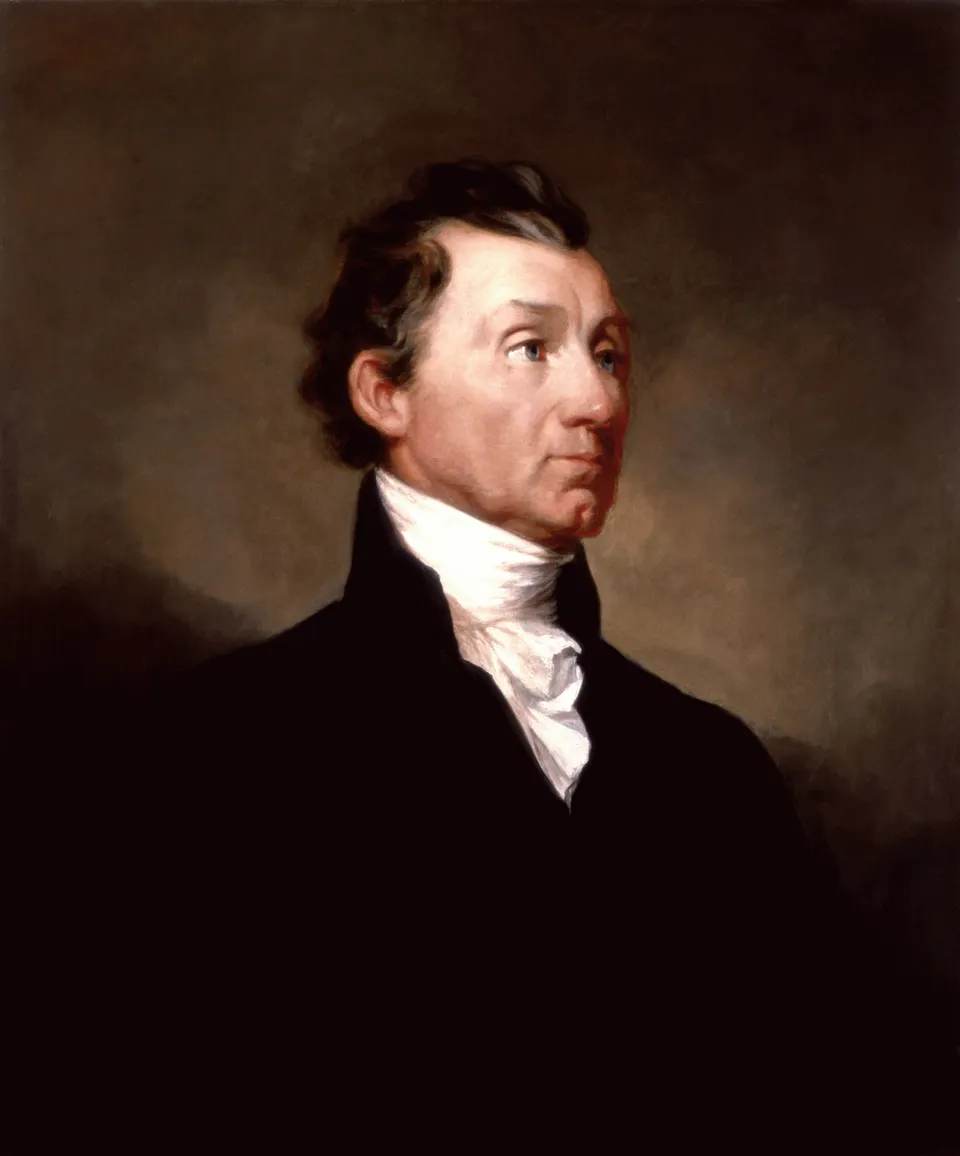
Samuel Finley Breese Morse · Public domain · Source
As new states arose in Latin America, there were fears that the Holy Alliance powers would help Spain recover its colonies, and Russia was pushing down the north-west coast of North America. On 2 December 1823, in his annual message to Congress, President Monroe declared that the American continents were no longer open to colonization by European powers and that European interference in the Americas would be seen as a threat to the United States. In return, the United States would not meddle in European affairs.
The United States then lacked the military power to back this up, but the Royal Navy, eager for Latin American markets, effectively acted the same way. The Monroe Doctrine became the basis of American isolationism and was later used to assert US dominance in the Western Hemisphere.