Latin American Wars of Independence
With Spain occupied by Napoleon, criollos launched wars of independence. Led by Bolívar and San Martín, most of Latin America was independent by the mid-1820s.
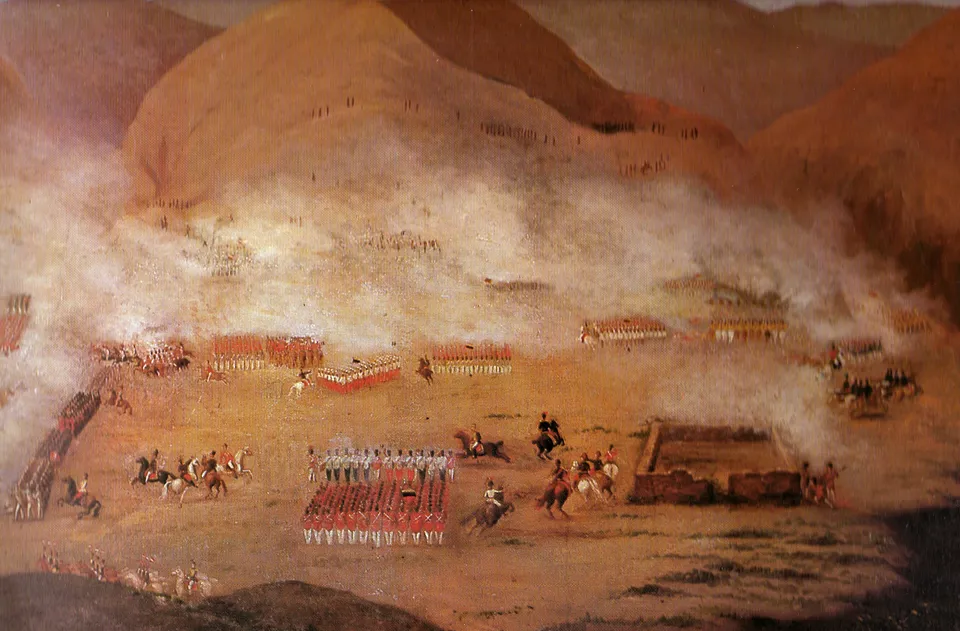
Unknown author · Public domain · Source
Criollos — whites born in the Spanish and Portuguese colonies — were shut out of high office by peninsulares from Spain and chafed at trade controls. Enlightenment ideas and the American, French and Haitian revolutions inspired them, and when Napoleon occupied Spain in 1808, self-governing juntas sprang up from 1810. In Mexico the priest Hidalgo led peasants and indigenous people in revolt in 1810.
In the north Bolívar liberated Venezuela and Colombia and founded Gran Colombia (1819). In the south Argentina declared independence in 1816, and San Martín crossed the Andes to free Chile (1818) and proclaimed Peru’s independence (1821). In 1824 Bolívar’s lieutenant Sucre won at Ayacucho, ending Spanish rule. Mexico became independent in 1821, and Brazil in 1822 under a Portuguese prince as emperor.
The Monroe Doctrine and Britain kept the European powers from intervening. Yet after independence power and land stayed with criollo landowners, and the lot of indigenous people and mestizos changed little. Bolívar’s dream of union failed and the region split into many states, followed by the rule of strongmen (caudillos) and economic dependence on British and other foreign capital.