Politics737–793 (reign of King Mun)

Reforms of King Mun of Balhae

King Mun made peace with Tang and adopted its institutions, creating the Three Departments and Six Ministries; he used the era name Daeheung and opened the Silla Road.
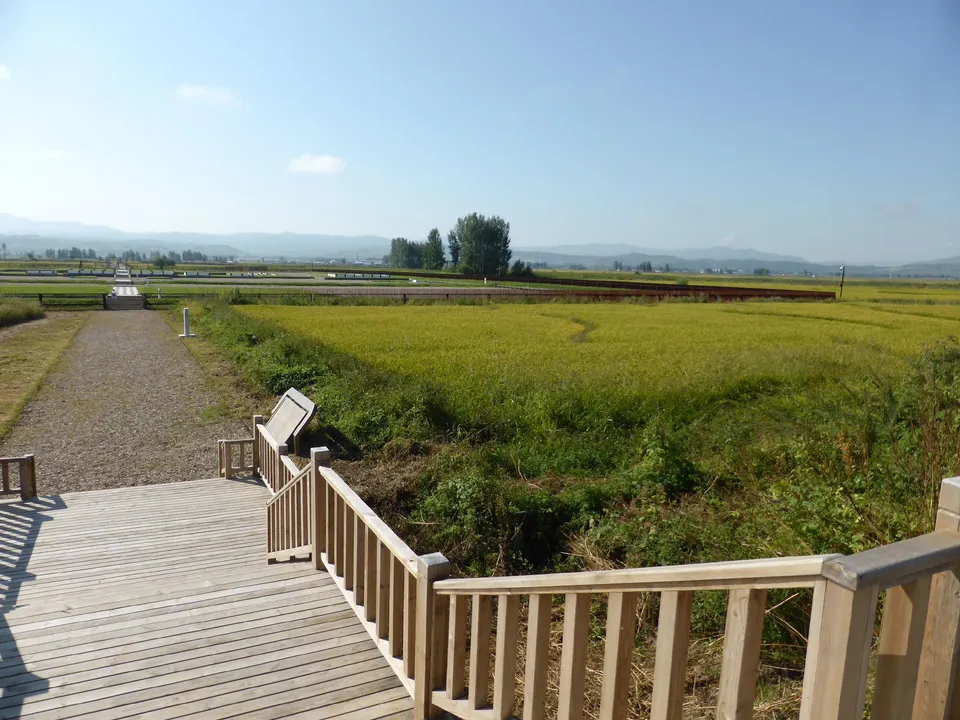
Site of Balhae’s Middle Capital (Xigucheng), the capital under King Mun, Helong, China

Senkaku Islands · CC BY-SA 4.0 · Source

Mun used the era names Daeheung and Boryeok, and the epitaph of Princess Jeonghyo calls him "His Majesty the Emperor". In 762 Tang raised his title from "Commandery Prince" to "King of Balhae".

The central government had three departments (Jeongdang, Seonjo, Jungdae) and six ministries named after Confucian virtues (Chung, In, Ui, Ji, Ye, Sin). Though modelled on Tang, Balhae’s system was distinctive: the head of the Jeongdang-seong ran the state, and the ministries were split between two directorates. The Juja-gam was the highest school.

Mun moved the capital to Sanggyeong and traded with Silla along the Silla Road from the Eastern Capital to Jeongcheon (Deogwon). Balhae kept the Silla, Japan, Yingzhou, Khitan and Tribute (Amnok) roads, radiating from Sanggyeong to its neighbours. As exchanges with Tang flourished, Tang set up the Balhae Lodge (Bohai guan) at Dengzhou on the Shandong peninsula to house Balhae envoys and merchants.

The map in AD 737

OpenFreeMap © OpenMapTiles © OpenStreetMap contributors

States and rulers at the time
Tang — Emperor Xuanzong
Silla — King Seongdeok → King Hyoseong
Places
Sanggyeong (Upper Capital) of Balhae

People

  • King Mun (Dae Heum-mu)AD 793

    monarch · Balhae's third king, who used the era name Daeheung, made peace with Tang, set up the Three Departments and Six Ministries, moved the capital to Sanggyeong and opened the Silla Road

Before and after

Later
AD 751 Battle of Talas

Themes that include this event

  • Sui, Tang and the East Asian WorldAD 317 – AD 979

    From the divided Southern and Northern Dynasties and the Gupta age through the Sui and Tang empires to the founding of the Song — the age when an East Asian world sharing law codes, Buddhism, Confucianism and Chinese characters took shape, and Korea and Japan built their states on its model

  • Central Government Through the AgesAD 250 – 1899

    From the noble councils of the Three Kingdoms to the State Council, the Border Defense Council and the Gabo cabinet — how central government shifted between aristocratic consensus and royal power

  • Educational Institutions Through the AgesAD 372 – 1943

    From the Taehak and Gukhak to the Gukjagam and Seonggyungwan, modern schools and the colonial education ordinances — state schools that trained officials and the private schools that filled the gaps