Institutions over timeAD 372 – 194318 events

Educational Institutions Through the Ages

From the Taehak and Gukhak to the Gukjagam and Seonggyungwan, modern schools and the colonial education ordinances — state schools that trained officials and the private schools that filled the gaps
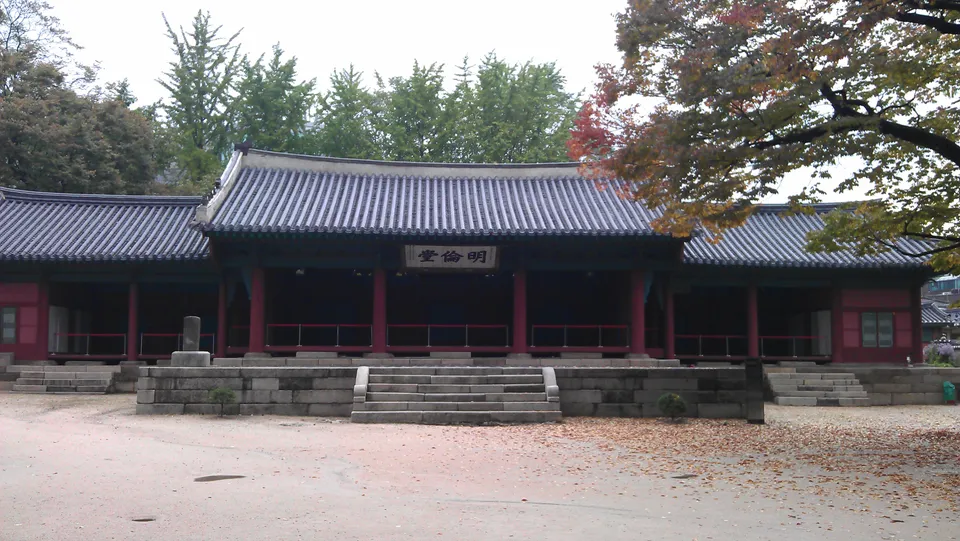
성균관 명륜당 — 조선 최고 교육 기관의 강당

Christian Bolz · CC BY-SA 3.0 · Source

At a glance

PeriodInstitutionsKey points
Goguryeo (Sosurim, 372)Taehak (capital), gyeongdang (provinces)Confucian classics; gyeongdang taught reading and archery
Silla (682 · 788)Gukhak (Sinmun); dokseo sampumgwa (Wonseong)Analects and Classic of Filial Piety; limited by true-bone resistance
Balhae (King Mun)JujagamHighest academy
Goryeo (Seongjong, 992)Gukjagam; classics scholars sent to 12 mokConfucian training of officials
Mid-Goryeo (11th – 12th c.)Choe Chung’s academy, 12 private schools → state revivalSeojeokpo; seven courses and Yanghyeongo; six colleges
Late Goryeo (Gongmin, 1367)Seonggyungwan rebuiltPure Confucian training; rise of new scholar-officials
Joseon (1398 –)Seonggyungwan, Four Schools, hyanggyo (state)Saengwon and jinsa enter; a hyanggyo in every county
Joseon (1543 –)Seowon (Baegundong → Sosu, royal charter); seodangSarim bases → cut to 47 in 1871
Opening era (1883 · 1886)Wonsan Haksa (first private), Yugyeong Gongwon (first state)Paichai and Ewha (missionaries)
Second Gabo Reform (1895)Rescript on education; Hanseong Normal School, primary schoolsMoral, physical, intellectual training; modern system begins
First Education Ordinance (1911)Four-year common schools"Loyal subjects"; Japanese and vocational training
Second and third ordinances (1922 · 1938)Six-year schools, university rules → Korean optional (1938)Keijō Imperial University (1924); national schools (1941)

The theme on the map

OpenFreeMap © OpenMapTiles © OpenStreetMap contributors

18 events in this theme

  1. King Sosurim adopted Buddhism through the monk Sundo from Former Qin, founded the Taehak academy and issued a law code.

  2. King Sinmun founded the Gukhak, a Confucian academy to train officials steeped in Confucian political ideals who would support the throne.

  3. King Mun made peace with Tang and adopted its institutions, creating the Three Departments and Six Ministries; he used the era name Daeheung and opened the Silla Road.

  4. King Wonseong graded students of the National Academy into three ranks by their reading of the Confucian classics, for use in appointing officials.

  5. Adopting Choe Seung-ro’s memorial, King Seongjong built the two-chancellery, six-ministry system, set up twelve provincial governorships and founded the National University.

  6. When the retired chief minister Choe Chung opened his Nine-Course Academy, twelve private schools flourished; as state schools declined, later kings revived them.

  7. As the Yuan gave way to the Ming, King Gongmin purged the pro-Yuan faction, recovered the Ssangseong Commandery, and, through Sin Don, curbed the magnates to restore royal power.

  8. After the move to Hanyang the highest academy, Seonggyungwan, was built. With the Four Schools in the capital and the hyanggyo in the provinces it made up the state school system, while village schools (seodang) and private academies (seowon) taught privately.

  9. Ju Se-bung founded the first seowon academy at Punggi; in 1550, at Yi Hwang’s request, it received a royal charter as Sosu Seowon.

  10. The Daewongun closed all but 47 of the country’s private Confucian academies, having already abolished the Mandongmyo shrine of the Noron faction in 1865.

  11. Residents of the treaty port of Wonsan raised funds to found Wonsan Haksa, Korea’s first modern private school.

  12. American Protestant missionaries founded Paichai Hakdang (1885, Appenzeller) and Ewha Hakdang (1886, Mary Scranton) in Jeong-dong, Seoul. Ewha was Korea’s first modern school for women.

  13. The government invited the American teachers Hulbert, Gilmore and Bunker and founded Yugyeong Gongwon, the first modern state school.

  14. Gojong proclaimed the Rescript on Building the Nation through Education, then founded the Hanseong Normal School and primary schools, laying down a modern school system.

  15. The Government-General issued the first Joseon Education Ordinance to raise "loyal and good subjects", setting four-year common schools and allowing only low-level education centred on Japanese and vocational training.

  16. Yi Sang-jae and others formed a society to found a university with Korean funds and raised money nationwide. Japanese obstruction defeated it.

  17. After the March First Movement Japan issued the second Joseon Education Ordinance, extending common schools to six years, making Korean a required subject and providing for universities.

  18. Having launched the war with China, Japan proclaimed "Japan and Korea as one body" and tried to turn Koreans into loyal imperial subjects, forcing them to recite the Oath of Imperial Subjects, worship at Shinto shrines and bow toward the imperial palace.

Key people

  • Gojong1852 – 1919

    Twenty-sixth king of Joseon and first emperor of the Korean Empire

  • King SosurimAD 384

    Seventeenth king of Goguryeo, who adopted Buddhism, founded the Taehak and issued a law code

  • King SinmunAD 692

    Munmu's son and 31st king of Silla, who crushed Kim Heum-dol's revolt and strengthened royal power through the National Academy, the nine provinces and office-land grants

  • Seol Chong

    Wonhyo's son, who systematized idu to read the Confucian classics in Korean and wrote the parable Hwawanggye for King Sinmun

  • Gangsu

    Head-rank-six Confucian scholar of Silla whose skill at diplomatic letters served Kings Muyeol and Munmu

  • King Mun (Dae Heum-mu)AD 793

    Balhae's third king, who used the era name Daeheung, made peace with Tang, set up the Three Departments and Six Ministries, moved the capital to Sanggyeong and opened the Silla Road

  • King WonseongAD 798

    38th king of Silla (Kim Gyeong-sin), who created the Dokseo Sampumgwa to select officials by their reading of the Confucian classics

  • King SeongjongAD 960 – AD 997

    Sixth king of Goryeo, who adopted Choe Seung-ro’s 28-article memorial and built a Confucian central and local administration

  • Choe Seung-roAD 927 – AD 989

    Confucian scholar of Silla head-rank-six origin whose 28-article memorial shaped Seongjong’s Confucian state

  • Choe ChungAD 984 – 1068

    Chief minister turned teacher whose Nine-Course Academy led the private schools; called the "Confucius of the East"

  • King Munjong1019 – 1083

    Eleventh king of Goryeo, whose reign marked the height of the dynasty; father of Uicheon

  • King Yejong1079 – 1122

    Sixteenth king of Goryeo, who sent Yun Gwan to build the Nine Forts and revived state schooling