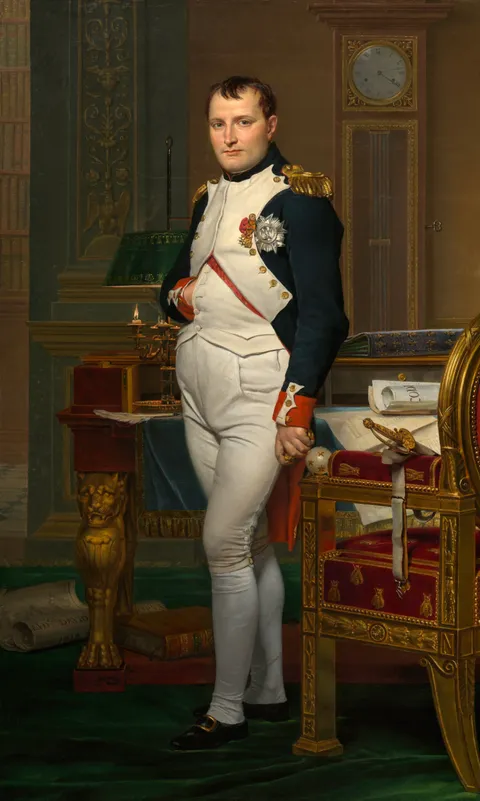
Napoleon Crowned Emperor
Also called: Napoleonic Code, Coup of 18 Brumaire
Having seized power in a coup, Napoleon became emperor with the approval of a plebiscite and was crowned in Notre-Dame Cathedral (the First Empire). The same year he issued the Napoleonic Code.
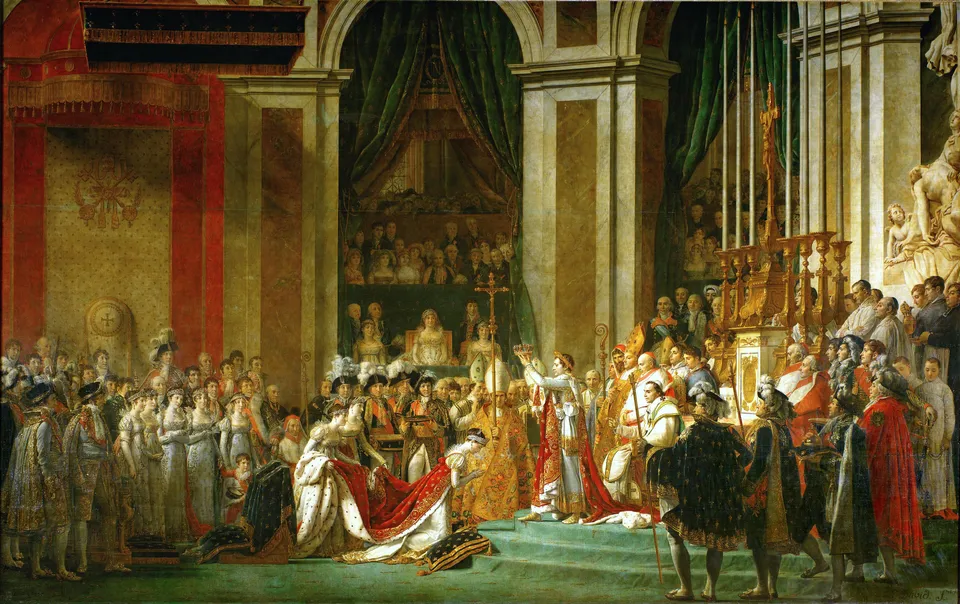
Jacques-Louis David / Georges Rouget · Public domain · Source
Famous from his Italian and Egyptian campaigns amid the turmoil after the Revolution, Napoleon overthrew the Directory in the coup of 18 Brumaire in November 1799 and became First Consul. He made peace with the Pope (the Concordat of 1801), founded the Bank of France and reorganized public education.
The Civil Code (Napoleonic Code) promulgated in March 1804 fixed in law the gains of the Revolution — equality before the law, protection of private property and freedom of contract — and became a model for many countries’ civil law. In May the Senate proclaimed him emperor, confirmed by a plebiscite. On 2 December, with Pope Pius VII looking on, Napoleon crowned himself. The republic had returned to monarchy.