Occupation of the Ruhr and German Hyperinflation
Also called: Ruhr Crisis, Weimar hyperinflation, Dawes Plan, Beer Hall Putsch
When Germany fell behind on reparations, France and Belgium occupied the industrial Ruhr. The German government answered with passive resistance financed by printing money, and the mark collapsed.
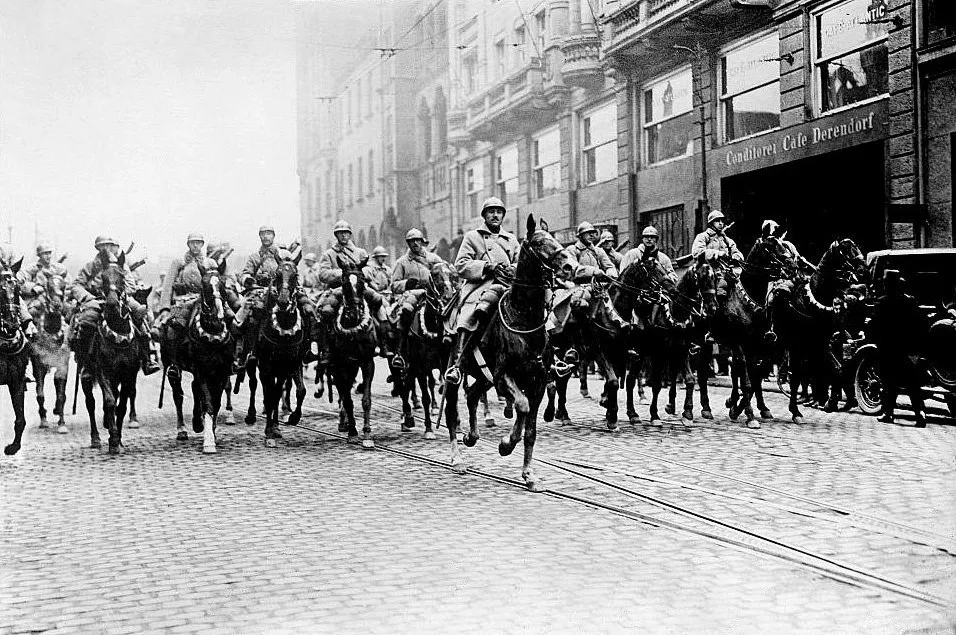
Bain News Service, publisher · Public domain · Source
In 1921 the Allies set German reparations at 132 billion gold marks. When Germany fell behind on deliveries of coal and timber, France and Belgium sent troops on 11 January 1923 to seize the Ruhr, the heart of German coal and steel. Berlin called on workers to down tools in passive resistance and paid their wages by printing money.
Prices that were already rising ran completely out of control: by November one dollar bought 4.2 trillion marks. The savings and pensions of the middle class were wiped out and distrust of the Republic deepened. On 8–9 November Hitler staged a putsch in Munich; it failed, and in prison he wrote Mein Kampf.
Chancellor Stresemann called off passive resistance in September and tamed prices with a new currency, the Rentenmark, in November. Under the American-designed Dawes Plan of 1924 Germany paid reparations in instalments and borrowed US capital, the economy revived, and the occupying troops left by 1925.