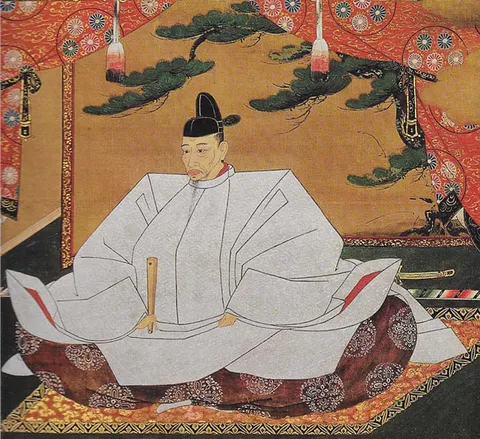
Unification of Japan under Oda Nobunaga and Toyotomi Hideyoshi
Also called: Azuchi–Momoyama period, Honnōji Incident, Sword hunt
Oda Nobunaga ended the Muromachi shogunate in 1573 and opened the way to unification with his musketeers; his successor Toyotomi Hideyoshi ended the Warring States era and unified Japan in 1590.
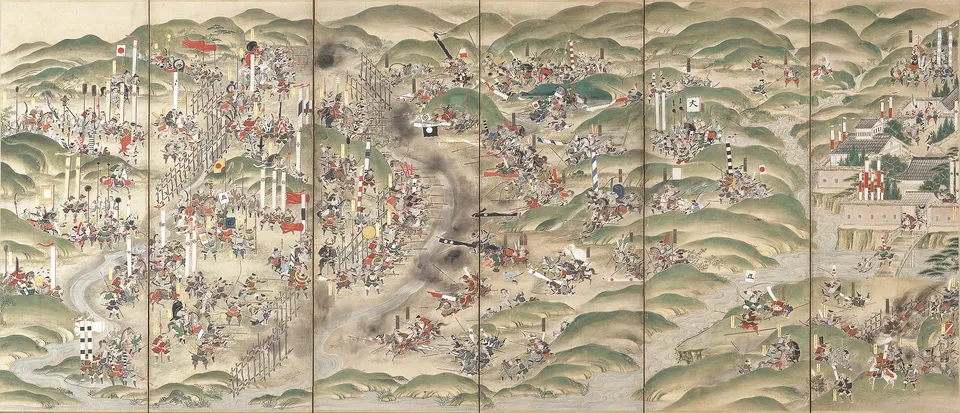
Unknown author · Public domain · Source
The man who began to end the Warring States era of feuding daimyo after the Ōnin War was Oda Nobunaga of Owari. He defeated Imagawa Yoshimoto at Okehazama in 1560, entered Kyoto in 1568 as patron of Ashikaga Yoshiaki, and in 1573 drove Yoshiaki out, ending the Muromachi shogunate. At Nagashino in 1575 he broke the Takeda army with massed matchlocks, the weapon brought by the Portuguese. He fostered trade by abolishing market monopolies and tolls (rakuichi rakuza), burned hostile Buddhist powers such as Enryakuji, and allowed Christian missions.
When Nobunaga died at the Honnōji temple in Kyoto in 1582, betrayed by his vassal Akechi Mitsuhide, his retainer Toyotomi Hideyoshi struck down Mitsuhide and took his place. Hideyoshi built Osaka Castle, became imperial regent (kampaku) in 1585 and in 1590 destroyed the Hōjō of Odawara, unifying the country. His nationwide land survey (Taikō kenchi), which assessed taxes by rice yield (kokudaka), and his sword hunt of 1588, which disarmed the peasants, separated warriors from farmers. In 1587 he ordered the missionaries expelled.
Once the country was unified, Hideyoshi turned the daimyo’s energies outward, invading Korea in 1592 with the declared aim of conquering Ming China (the Imjin War). The seven-year war ended with his death in 1598, and as the Toyotomi regime wavered Tokugawa Ieyasu built up his power.