Calypso’s Island and the Phaeacians
Also called: Calypso, Nausicaa, Ogygia, Phaeacians
A legend handed down over the centuries.
A Greek myth told in Books 5–8 of the Odyssey. The sole survivor, Odysseus is held for seven years on the island of the nymph Calypso until the gods have him released; he sails off on a raft, reaches the land of the Phaeacians and tells them of his adventures.
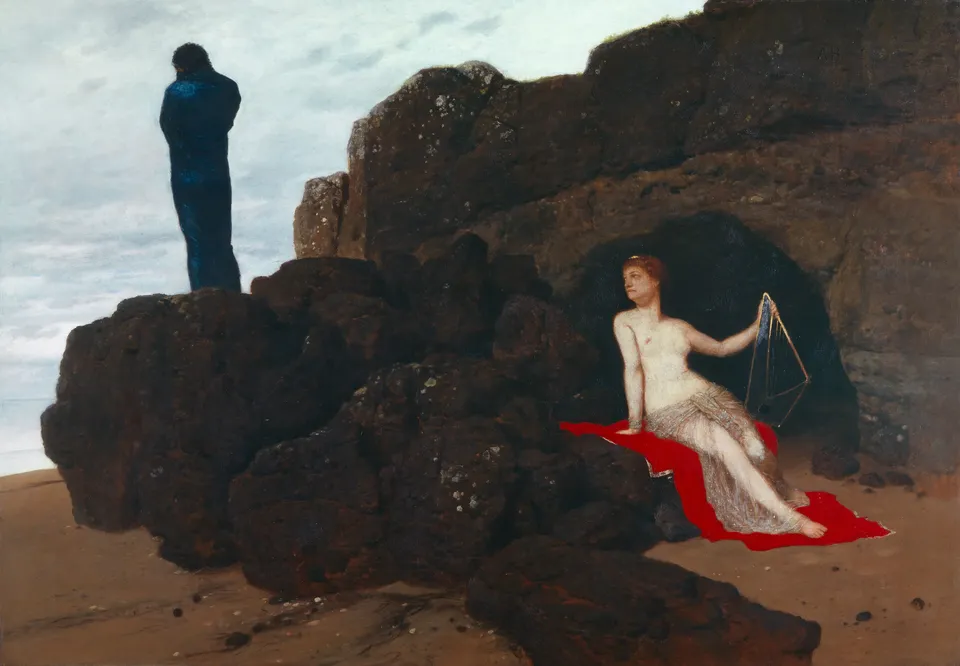
Arnold Böcklin · Public domain · Source
This Greek myth is told in Books 5–8 of Homer’s Odyssey. After the shipwreck Odysseus, the only survivor, was held for seven years by the nymph Calypso on the island of Ogygia. Calypso offered to make him her husband and immortal, but every day he sat weeping on the shore, longing for his home Ithaca and his wife Penelope. At Athena’s request Zeus sent Hermes, and Calypso let him go.
Setting out on a raft, Odysseus was wrecked again in a storm raised by Poseidon and washed up on Scheria, island of the Phaeacians. Meeting the princess Nausicaa on the shore, he went to the palace, where at a feast he wept when the bard Demodocus sang of the Trojan Horse, revealed who he was and told of his adventures from the Cyclops to the Sirens (Books 9–12). The Odyssey thus begins in the middle of the story and tells the earlier events in flashback.