First Performance of Sophocles’ Oedipus the King
Also called: Oedipus Rex, Oedipus Tyrannus
Around 429 BC Sophocles’ tragedy Oedipus the King was first performed at the City Dionysia in the Theatre of Dionysus in Athens. It won only second prize that year, but Aristotle held it up in his Poetics as the model of tragedy, and it has become the most famous Greek tragedy.
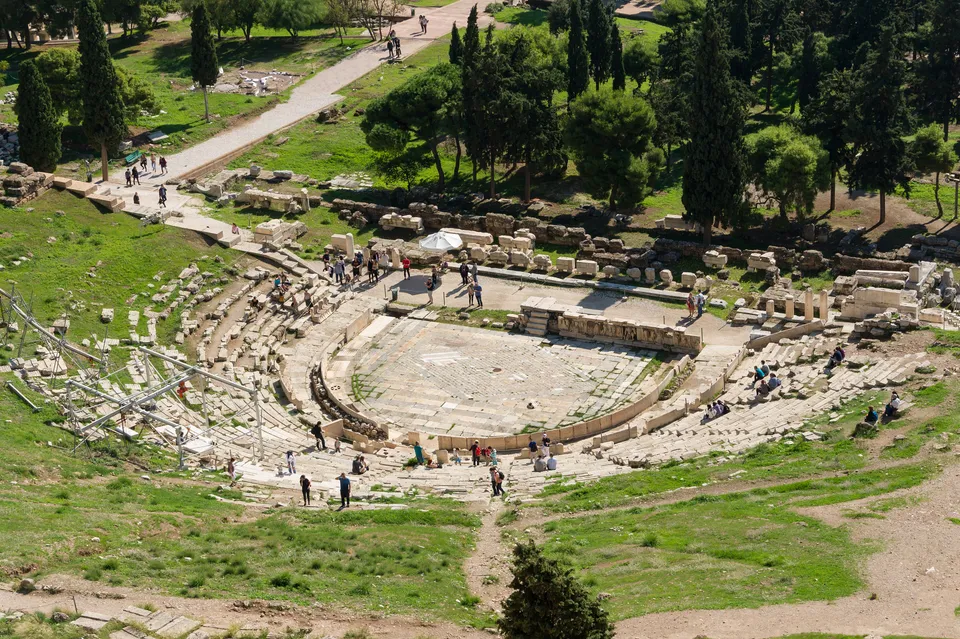
Each spring Athens held the City Dionysia, at which three poets each staged three tragedies and a satyr play in competition at the Theatre of Dionysus on the south slope of the Acropolis. Sophocles’ Oedipus the King is thought to have been first performed around 429 BC, though the date is uncertain. According to tradition, first prize that year went to Philocles, nephew of Aeschylus, and Sophocles came second.
The play opens in plague-stricken Thebes. King Oedipus learns from an oracle that the plague will end only when the killer of the former king Laius is found, and sets out to find him; but through the blind seer Tiresias, Queen Jocasta, a messenger from Corinth and an old shepherd he draws ever closer to the truth that he has killed his father and married his mother. Jocasta hangs herself, and Oedipus blinds himself and asks to be exiled. Because it was staged when plague was raging in Athens (from 430 BC), some read it in the light of its time.
In his Poetics Aristotle cited the play’s reversal and recognition as the model of tragedy. In modern times Freud used the story in The Interpretation of Dreams to explain the “Oedipus complex”. The Theatre of Dionysus was later rebuilt in stone, and its remains still stand on the south side of the Acropolis.