Ovid’s Metamorphoses
Also called: Metamorphoses, Metamorphoseon libri
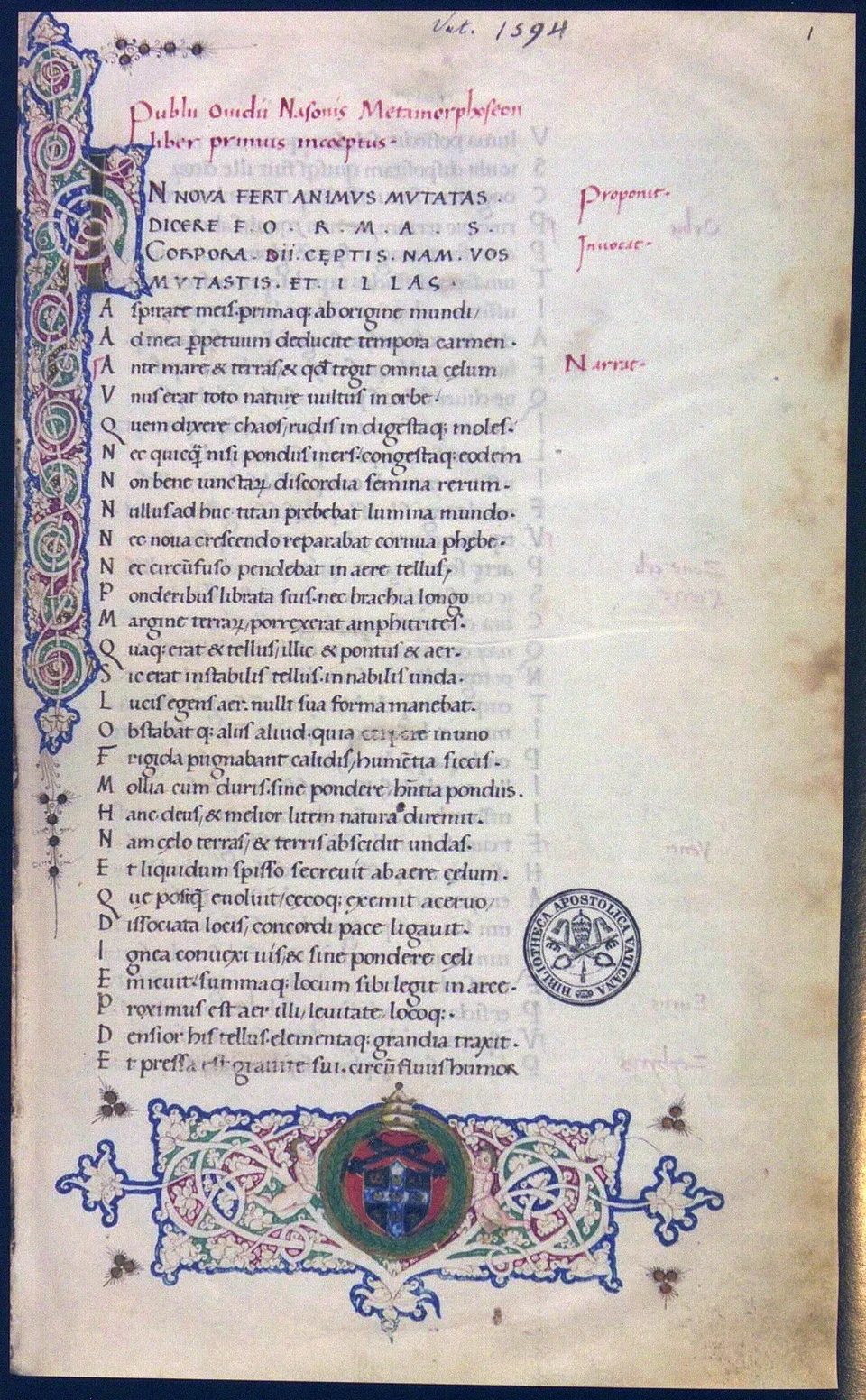
Around AD 8 the Roman poet Ovid completed the Metamorphoses, an epic in fifteen books weaving together some 250 myths of transformation from the creation of the world to the deification of Caesar; its last books lead through Aeneas, Romulus and Numa into Roman history. The same year he was banished to Tomis on the Black Sea.
Ovid · Public domain · Source
Ovid’s Metamorphoses begins with the world emerging from chaos and links, without a break, some 250 Greek and Roman myths in which gods and humans change into animals, trees, stones or stars — fifteen books in all. Stories such as Apollo and Daphne, Pyramus and Thisbe, Icarus and Orpheus reached later ages through this book. He wrote it from about AD 2 and finished it around AD 8.
Books 13–14 briefly retell Aeneas’ wanderings after Troy (the “little Aeneid”) and go on to his deification and that of Romulus as the god Quirinus. In Book 15 Numa hears the teachings of Pythagoras, and at the end Caesar becomes a star and the age of Augustus is praised. In the Fasti, his poem on the Roman calendar, Ovid also tells of the death of Remus (Book 4) and of Lucretia (Book 2).
In AD 8 Augustus banished Ovid to Tomis on the Black Sea (today Constanța in Romania); Ovid said only that the cause was “a poem and a mistake.” He never returned and died there around AD 17. The Metamorphoses became the most important source of Greek and Roman myth for medieval and Renaissance poets and painters.