Prometheus Steals Fire
Also called: Prometheus, Prometheus Bound, Theft of fire
A legend handed down over the centuries.
A Greek myth told in Hesiod’s Theogony and Works and Days and in the tragedy Prometheus Bound attributed to Aeschylus. The Titan Prometheus stole the fire Zeus had hidden, carried it to mankind in a fennel stalk, and was chained to a rock where an eagle ate his liver every day.
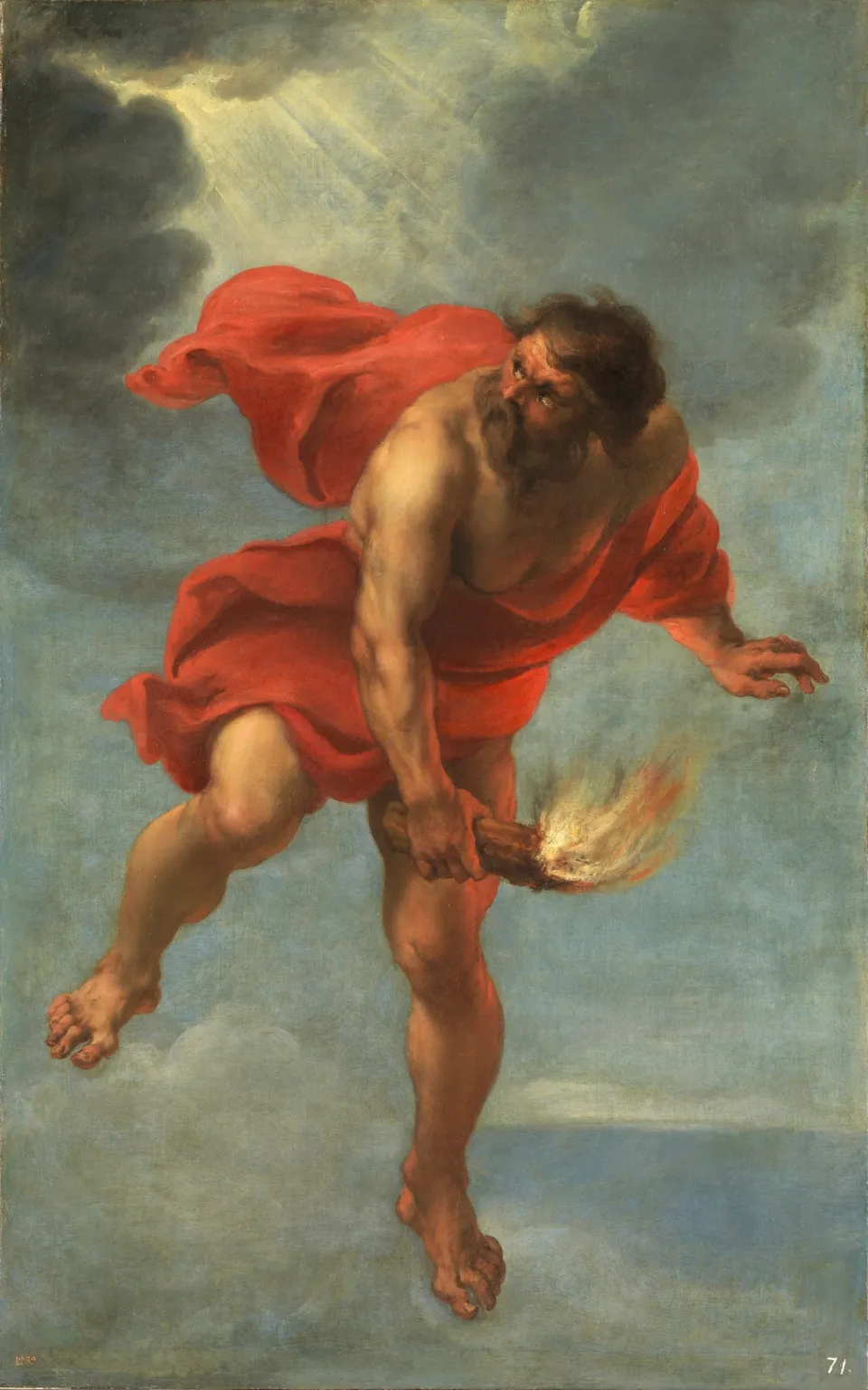
Jan Cossiers / After Peter Paul Rubens / Peter Paul Rubens · Public domain · Source
This Greek myth is told in Hesiod’s Theogony and Works and Days and in the tragedy Prometheus Bound attributed to Aeschylus. According to the Theogony, when gods and men divided the sacrifice at Mecone, the Titan Prometheus wrapped the meat in an ox’s stomach and covered the bones with fat, and let Zeus choose. Zeus took the fat-covered bones, and ever since men have eaten the meat of sacrifices and burned the bones for the gods. Angered at the trick, Zeus hid fire from mankind, and Prometheus stole it back, hiding the spark in a hollow fennel stalk.
Zeus bound Prometheus to a rock in the Caucasus, where an eagle came every day to eat his liver, which grew back each night, until Heracles shot the eagle and freed him. The story that Prometheus shaped men from clay is not in Hesiod but appears in later writers such as Apollodorus and Ovid. Aeschylus portrays him as the benefactor of mankind who gave not only fire but writing, numbers and the arts.