Red Guards
Also called: Red August, Destroy the Four Olds, Great Exchange of Revolutionary Experience
After Mao Zedong first received Red Guards in Tiananmen Square on 18 August 1966, the student Red Guard movement spread across China. By November eight rallies had drawn 11 to 13 million young people to Beijing, and the Red Guards turned to violence in the name of smashing the “Four Olds”.
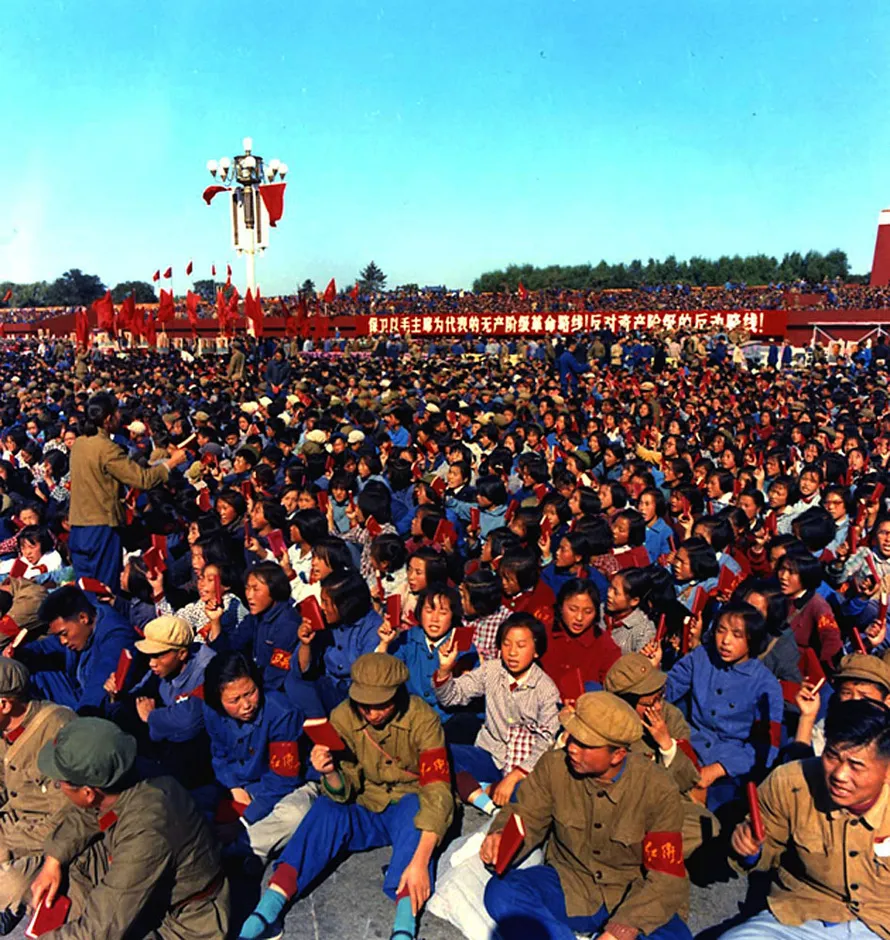
孟昭瑞 · Public domain · Source
At the end of May 1966 students at the middle school attached to Tsinghua University first called themselves “Red Guards”, and after Mao wrote a letter backing them on 1 August Red Guard groups sprang up in schools nationwide. At the first mass rally in Tiananmen Square on 18 August Mao wore a Red Guard armband; by official count 11 to 13 million young people travelled free by train to Beijing for the eight rallies held up to 26 November, as part of the “great exchange of revolutionary experience”.
Vowing to destroy the “Four Olds” — old ideas, culture, customs and habits — Red Guards renamed streets and wrecked temples, relics and private homes and libraries. Pupils beat teachers to death in a string of cases; official statistics record some 1,700 people beaten to death in Beijing alone in August–September 1966 (“Red August”). In 1967–1968 Red Guards and rebels split into factions that fought armed battles with rifles and even artillery.
As they grew uncontrollable, Mao sent workers’ propaganda teams into the universities in July 1968 to disband them, and from December young people were sent to the countryside.