Remilitarization of the Rhineland
Also called: Rhineland remilitarization
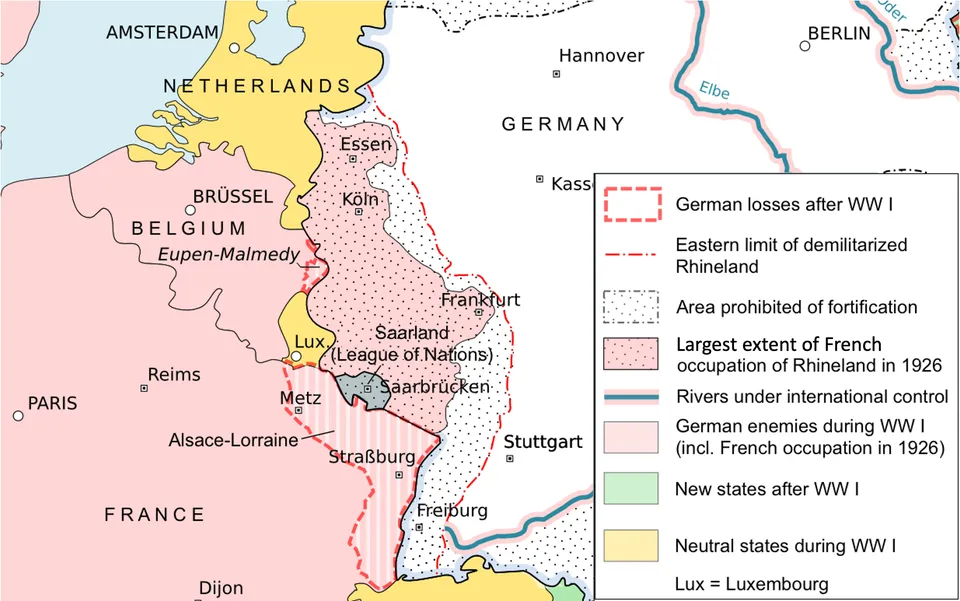
Hitler sent troops into the Rhineland, which the Treaties of Versailles and Locarno had made a demilitarized zone. Britain and France confined themselves to protests.
Soerfm · CC BY-SA 4.0 · Source
In January 1935 Hitler won back the Saar by plebiscite, and in March he reintroduced conscription, openly breaking the Versailles limits on armaments. Britain, France and Italy met at Stresa and agreed to stand together, but in June Britain signed a naval agreement accepting the rebuilding of the German navy, and Italy drifted away from both over Ethiopia.
On 7 March 1936, claiming that the Franco-Soviet mutual assistance treaty violated Locarno, Hitler marched German troops into the demilitarized zone along the Rhine. The force was small, but France, facing an election, and Britain, unwilling to fight, only protested. Hitler’s gamble paid off: he strengthened his support at home, fortified the western border, and Anglo-French appeasement became plain.