Excavation of Mycenae and the “Mask of Agamemnon”
Also called: Mask of Agamemnon, Grave Circle A
In 1876 Schliemann excavated Grave Circle A in the citadel of Mycenae in Greece and found gold masks and a wealth of gold objects. He believed he had found the tomb of Agamemnon, but the graves date to the 16th century BC, some three hundred years before the Trojan War.
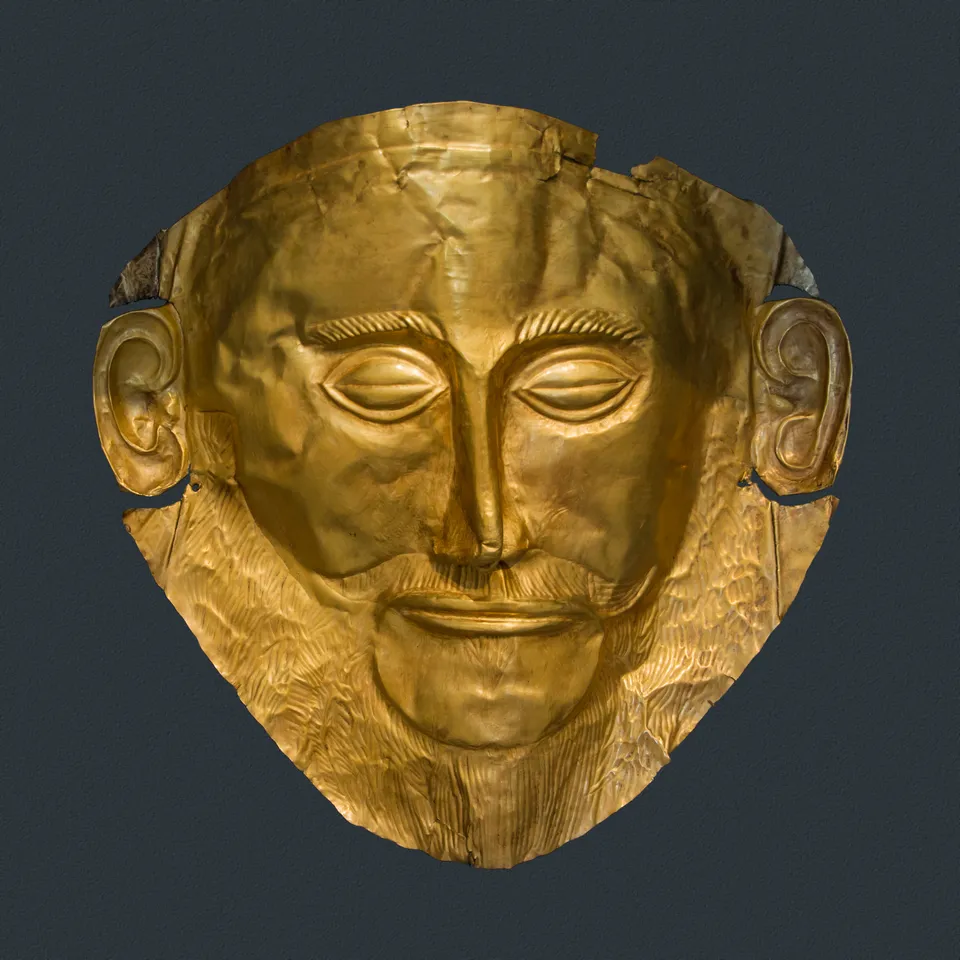
After Troy, Schliemann excavated Mycenae in 1876 under the supervision of the Archaeological Society of Athens (in the person of Panagiotis Stamatakis). Guided by the 2nd-century traveller Pausanias, who wrote that Agamemnon and his companions were buried within the walls, he dug the circular walled cemetery just inside the Lion Gate (Grave Circle A) and found five shaft graves (a sixth was found by Stamatakis the next year). They yielded several gold masks along with gold cups, swords and jewellery.
One of them, a bearded face from Shaft Grave V, came to be called the “Mask of Agamemnon”. Schliemann’s words “I have gazed upon the face of Agamemnon” are famous, but whether he actually said them is uncertain. Today the graves are dated to around the 16th century BC, early in the Mycenaean civilisation and some three centuries before the legendary Agamemnon. Claims that the mask is a forgery have been made, but most scholars consider it genuine. It is in the National Archaeological Museum in Athens.