Indian Rebellion of 1857 and the British Raj
Also called: Sepoy Mutiny, Indian Mutiny, First War of Indian Independence
Indian soldiers (sepoys) of the British East India Company rose up, and people of every class joined as the revolt spread across northern India. Britain crushed it, abolished the Mughal Empire and took India under direct rule.
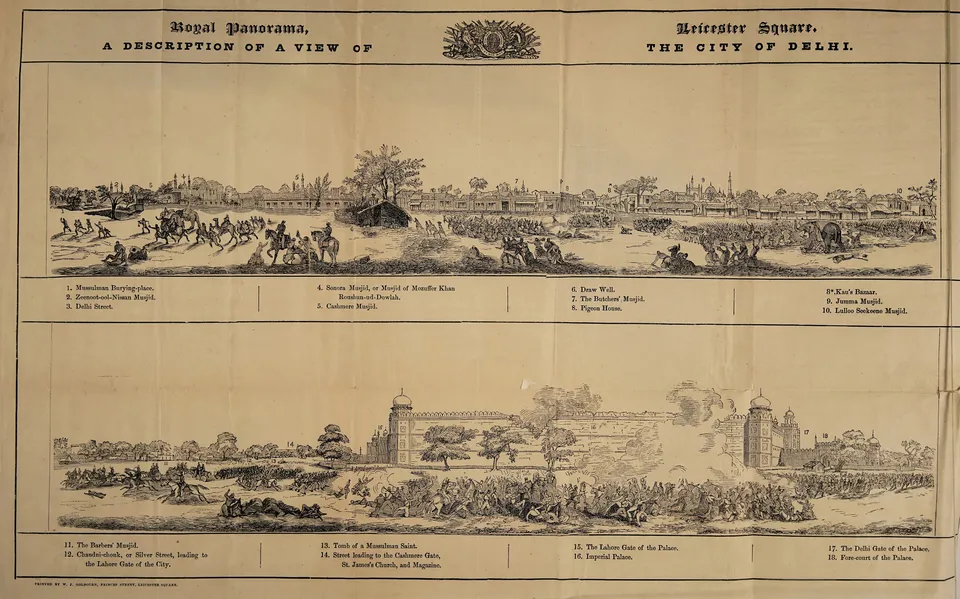
Robert Burford · Public domain · Source
After the Battle of Plassey (1757) the British East India Company came to control most of India, and British machine-made cotton ruined Indian handicrafts. Resentment grew as the Company annexed princely states without heirs and imposed heavy land taxes. Then a rumour spread that the cartridges of the new Enfield rifle were greased with the fat of cows, sacred to Hindus, and pigs, unclean to Muslims.
On 10 May 1857 the sepoys at Meerut rose and marched to Delhi, where they proclaimed the Mughal emperor Bahadur Shah II their leader. Peasants, artisans and old ruling families joined, and the revolt spread across northern India; figures such as Rani Lakshmibai of Jhansi fought the British. But the rebels lacked a united leadership, and Sikh and southern Indian forces sided with Britain, so the rising was crushed by around 1858.
Britain exiled Bahadur Shah II to Burma, ending the Mughal Empire (1858), and dissolved the East India Company so that the Crown ruled India directly. In 1877 Queen Victoria took the title Empress of India, creating the Indian Empire. The rising is regarded as India’s first large-scale national movement and is also called the Great Rebellion or the First War of Independence rather than the British name "Sepoy Mutiny".