Yellow River Civilization and the Shang
Also called: Yin dynasty, Oracle bones, Yellow River civilization
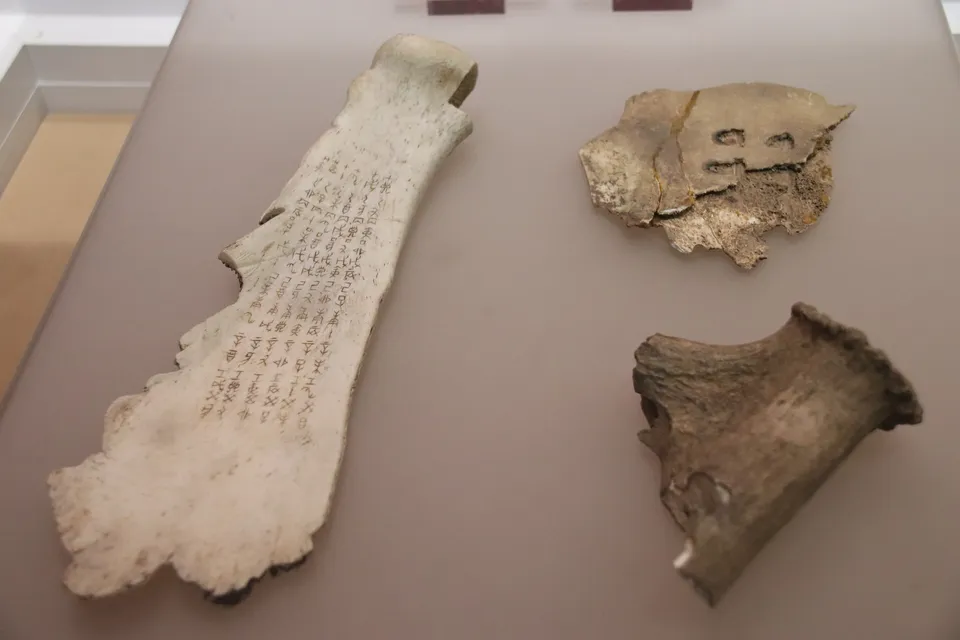
The Shang, rising on the Yellow River, is the oldest Chinese dynasty confirmed by evidence. Its kings decided affairs by divination with turtle shells and animal bones, and the oracle-bone inscriptions became the root of Chinese characters.
Gary Lee Todd, Ph.D. Complete indexed photo collection at WorldHistoryPics.com. · CC0 · Source
In Neolithic times the Yangshao (painted pottery) and Longshan (black pottery) cultures grew up as farming villages on the middle and lower Yellow River. Legend tells of an earlier Xia dynasty, but the first dynasty confirmed by sites and writing is the Shang, which arose around 1600 BC. Around 1300 BC King Pan Geng moved the capital to Yin (modern Anyang, Henan), so the dynasty is also called Yin.
The Shang king was a priest who sought the will of ancestors and heaven. Turtle plastrons or ox shoulder blades were heated and the cracks read as omens, and the results carved on the bone. These oracle-bone inscriptions came to light in 1899 among “dragon bones” sold as medicine, and excavations at Yinxu from 1928 proved the Shang’s existence (theocracy).
The Shang cast fine bronze ritual vessels and weapons and buried many people with their kings. It fell to the Zhou around 1046 BC. On the Korean peninsula the Bronze Age began around 2000–1500 BC.