Conflict28 August 1189 – 12 July 1191

Siege of Acre

After a siege of nearly two years Acre surrendered once Richard I and Philip II arrived; it then became the capital of the Kingdom of Jerusalem.
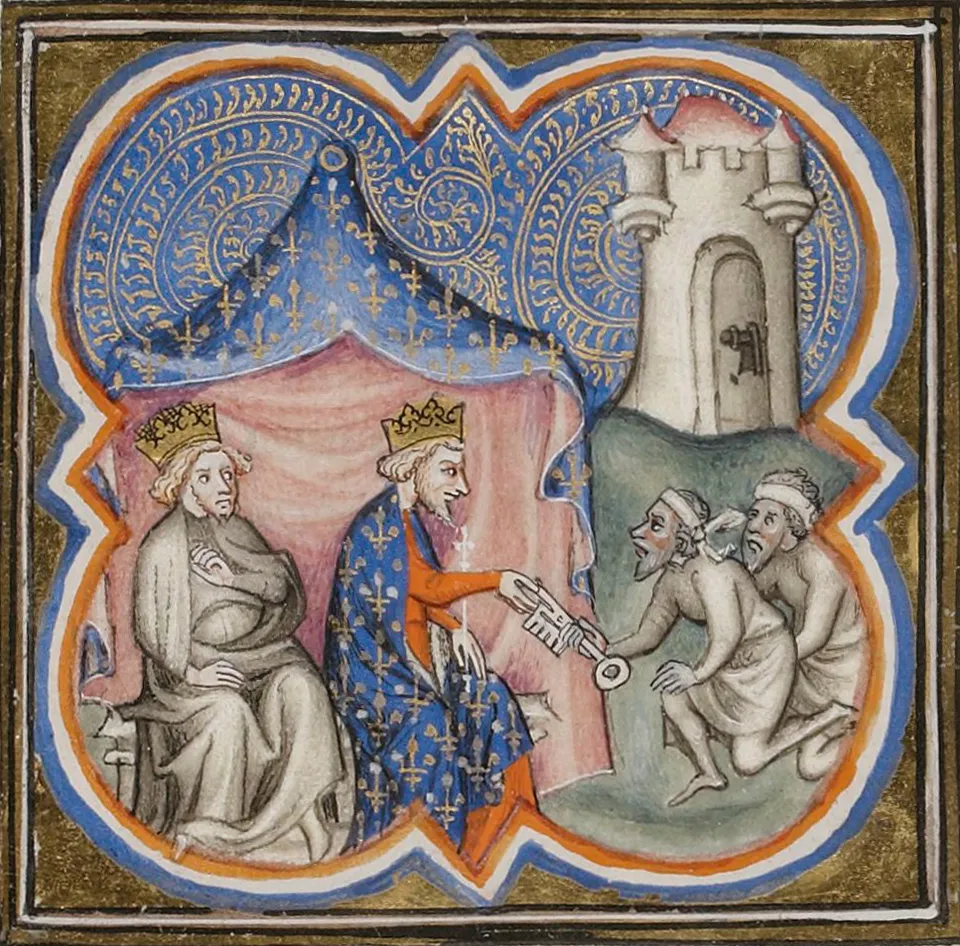
Philip II and Richard I receive the keys of Acre (1191) — miniature in the Grandes Chroniques de France, c. 1375–1380

Unknown author · Public domain · Source

Released after Hattin, Guy of Lusignan was refused entry to Tyre and in August 1189 laid siege to Acre with a small force. Saladin’s army soon encircled the besiegers in turn, and for nearly two years both sides lost many men to hunger and disease.

When Philip II (April) and Richard I (June) arrived in 1191 and battered the walls with siege engines, the garrison surrendered on 12 July. As ransom negotiations dragged on, Richard executed about 2,700 Muslim prisoners in August.

The map in 1189

OpenFreeMap © OpenMapTiles © OpenStreetMap contributors

States at the time
Kingdom of Jerusalem · victor
England · reinforcements
France · reinforcements
Ayyubid dynasty · defeated
Places
Acre

People

  • Guy of Lusignan1194

    commander · King of Jerusalem (r. 1186–1192), captured by Saladin at Hattin and later lord of Cyprus

  • Richard I of England1157 – 1199

    commander · King of England (r. 1189–1199), “the Lionheart”, who retook Acre in the Third Crusade and made the Treaty of Jaffa with Saladin

  • Philip II of France1165 – 1223

    commander · King of France (r. 1180–1223), “Augustus”, who went on the Third Crusade, left after Acre fell and seized England’s French lands

  • Saladin1137 – 1193

    commander · Sultan and founder of the Ayyubid dynasty who united Egypt and Syria, won at Hattin in 1187 and retook Jerusalem

Themes that include this event

  • The Crusades1095 – 1291

    From the Council of Clermont to the fall of Acre — two centuries of war between Latin Europe and the Islamic world over the Holy Land