Politics1228 – 18 February 1229

Sixth Crusade

The excommunicated Emperor Frederick II, without fighting, negotiated with Sultan al-Kamil of Egypt to receive Jerusalem for ten years.
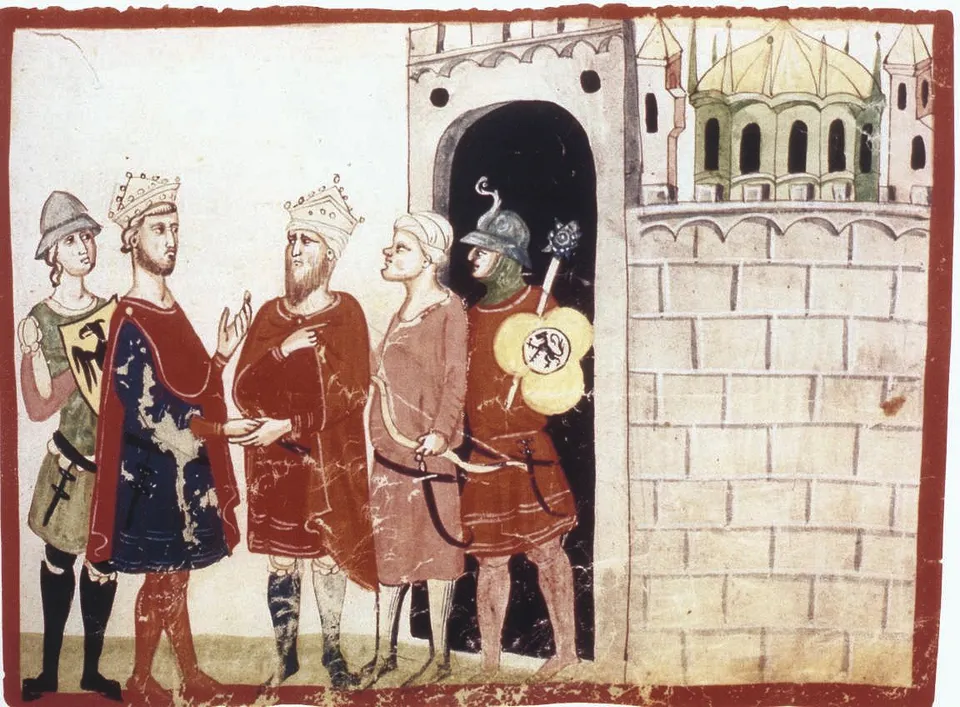
Frederick II (left) and Sultan al-Kamil conclude the Treaty of Jaffa — miniature in Giovanni Villani’s Chronicle, 14th century, Vatican Library

Giovanni Villani , Chronica, 14. Jahrhundert, Biblioteca Apostolica Vaticana, Rom Cod. Chigi L VIII 296, fol. 75r. · Public domain · Source

Frederick II had delayed so long that the pope excommunicated him, and he reached Acre in 1228 still under the ban. Knowing Arabic and at home in Islamic culture, he made a treaty at Jaffa in February 1229 with al-Kamil, who was then at odds with his relatives in Syria: Jerusalem, Bethlehem and Nazareth were returned, while the Muslim shrines on the Temple Mount (Haram al-Sharif) stayed in Muslim hands.

He crowned himself in the Church of the Holy Sepulchre and was condemned on both sides. Jerusalem was sacked by Khwarazmian troops in 1244 and never returned to crusader rule.

The map in 1228

OpenFreeMap © OpenMapTiles © OpenStreetMap contributors

States at the time
Holy Roman Empire
Ayyubid dynasty
Kingdom of Jerusalem
Places
Jerusalem

People

  • Frederick II, Holy Roman Emperor1194 – 1250

    leader · Holy Roman Emperor (r. 1220–1250) and King of Sicily who, while excommunicated, regained Jerusalem by negotiation in the Sixth Crusade

  • al-Kamil1177 – 1238

    diplomat · Ayyubid sultan of Egypt (r. 1218–1238) who defeated the Fifth Crusade and ceded Jerusalem to Frederick II by treaty in 1229

Before and after

Earlier
1189 Third Crusade

Themes that include this event

  • The Crusades1095 – 1291

    From the Council of Clermont to the fall of Acre — two centuries of war between Latin Europe and the Islamic world over the Holy Land