1912 Stockholm Olympics
Also called: Games of the V Olympiad, Stockholm 1912
With 28 nations taking part, the Stockholm Games introduced electronic timing and photo-finish judging and gave the modern Olympics their shape. Japan competed for the first time. The next Games, Berlin 1916, were cancelled by the First World War.
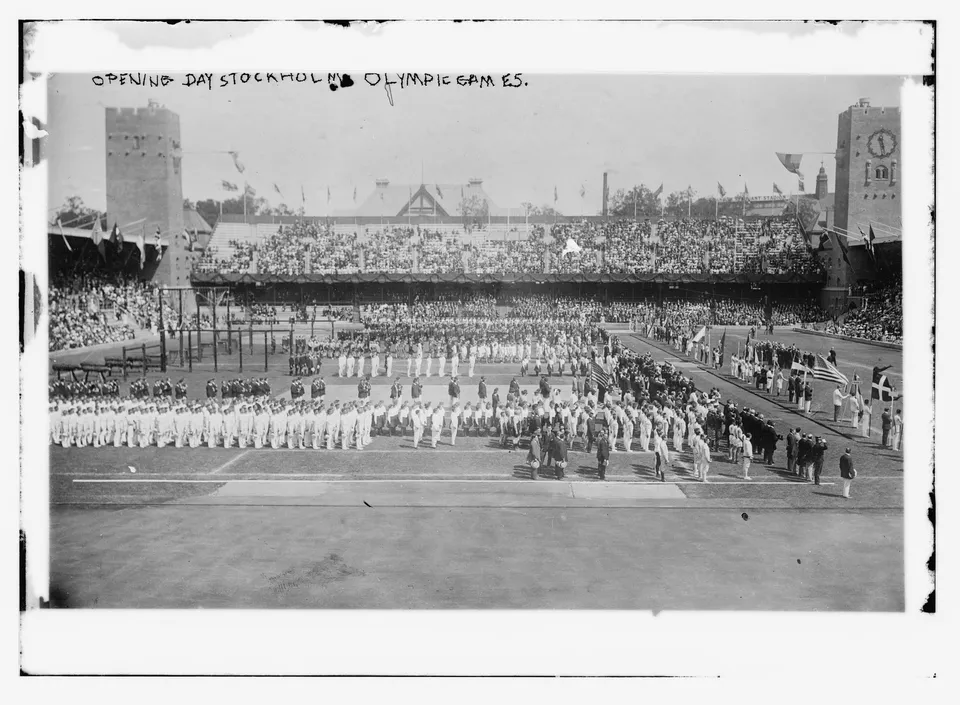
Bain News Service, publisher · Public domain · Source
King Gustaf V of Sweden opened the Games on 6 July 1912. Some 2,400 athletes from 28 nations took part, and electronic timing, photo-finish judging and a public-address system were used for the first time. The American Jim Thorpe swept the pentathlon and decathlon but was stripped of his medals when it emerged he had once been paid to play baseball (they were restored in 1982). Japan sent athletes for the first time, and art competitions were introduced; Coubertin’s “Ode to Sport”, entered under a pseudonym, won the gold medal for literature.
The next Games had been awarded to Berlin for 1916, but the outbreak of the First World War in 1914 meant they were never held. The numbering of the Olympiads continued regardless, so Antwerp 1920 became the VII Olympiad.