The Norse (Viking) Expansion
Also called: Viking Age, Norman invasions
From the late 8th century the Norse (Vikings) of Scandinavia sailed across Europe raiding and settling, founding the Duchy of Normandy, Kievan Rus’ and the Kingdom of Sicily, among others.
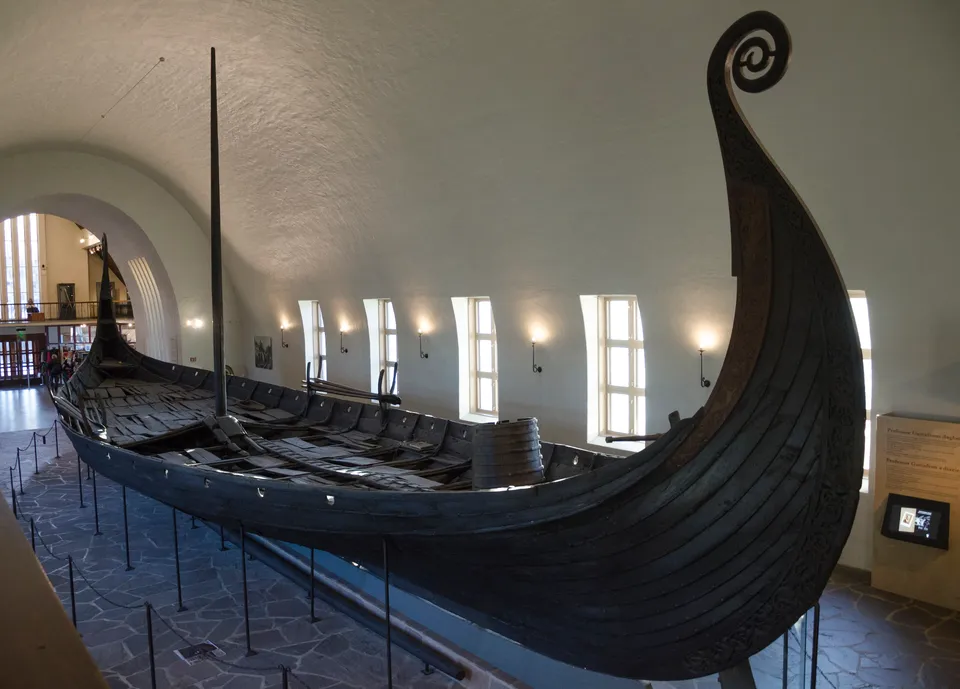
Petter Ulleland · CC BY-SA 4.0 · Source
The Norsemen of Scandinavia and Denmark raided across Europe in shallow-draught ships that could cross seas and sail up rivers. The sack of the monastery of Lindisfarne in England in 793 is taken as the start of the Viking Age. They ravaged the coasts and river valleys of the Frankish kingdom and England, where Alfred the Great fought them.
The Norse did not merely raid; they settled. To the west they reached Iceland and Greenland and, around 1000, North America; in the east the Rus’ founded a state centred on Novgorod and Kyiv. In 911 the Duchy of Normandy was created in northern France, and its descendants conquered England in 1066 and took southern Italy and Sicily in the 11th century.
Together with attacks by the Magyars and the Muslims, the Norse invasions weakened royal power in Western Europe, and a feudal society took root in which people relied on lords and knights who could defend them. The period is sometimes called the “second migration period” after the Germanic migrations. Meanwhile the Korean peninsula passed from late Silla through the Later Three Kingdoms to Goryeo.