The Taika Reform
Also called: Taika Reforms, Isshi Incident
In 645 Prince Naka no Ōe and Nakatomi no Kamatari overthrew the overbearing Soga clan and began reforms, modelled on Tang law codes, to build a centralised state under the sovereign (tennō).
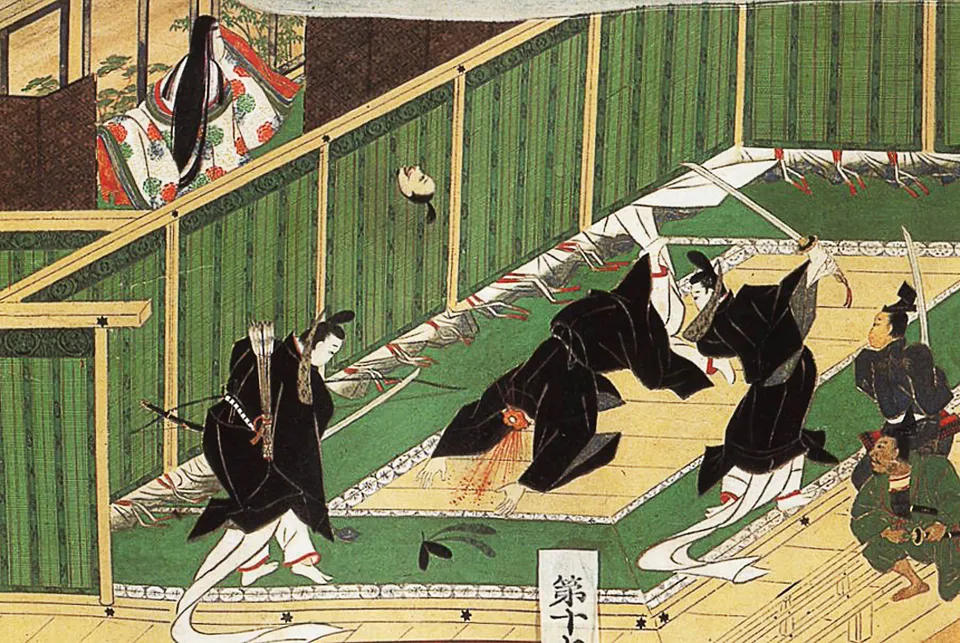
Gukei Sumiyoshi · Public domain · Source
In 6th- and 7th-century Wa the Soga clan, who had embraced Buddhism from Baekje, overshadowed the royal house. As students and monks returning from Sui and Tang described a state ruled by law codes, Prince Naka no Ōe and Nakatomi no Kamatari killed Soga no Iruka at court in 645 and drove his father Emishi to suicide (the Isshi Incident). Kōtoku took the throne, and the first era name, Taika, was adopted.
The reform edict of 646 declared the lands and people of royals and clans to be public (kōchi kōmin), called for household registers and the periodic allotment of land (handen shūju), and set taxes on the Tang zu-yong-diao model — though many scholars think the edict as given in the Nihon Shoki was later revised. After defeat at Baekgang in 663, Naka no Ōe (Emperor Tenji) built defences with the help of Baekje refugees and pressed on with reform; the Taihō Code of 701 completed the codified state. From about this time the country name “Nihon” and the title “tennō” came into use.