Talos, the Bronze Giant
Also called: Talos
A legend handed down over the centuries.
A Greek myth told in Book 4 of the Argonautica. As the returning Argo approached Crete, the bronze giant Talos, guardian of the island, hurled rocks to keep it away. Bewitched by Medea, the giant grazed his ankle, the nail sealing his single vein came loose, and he bled to death.
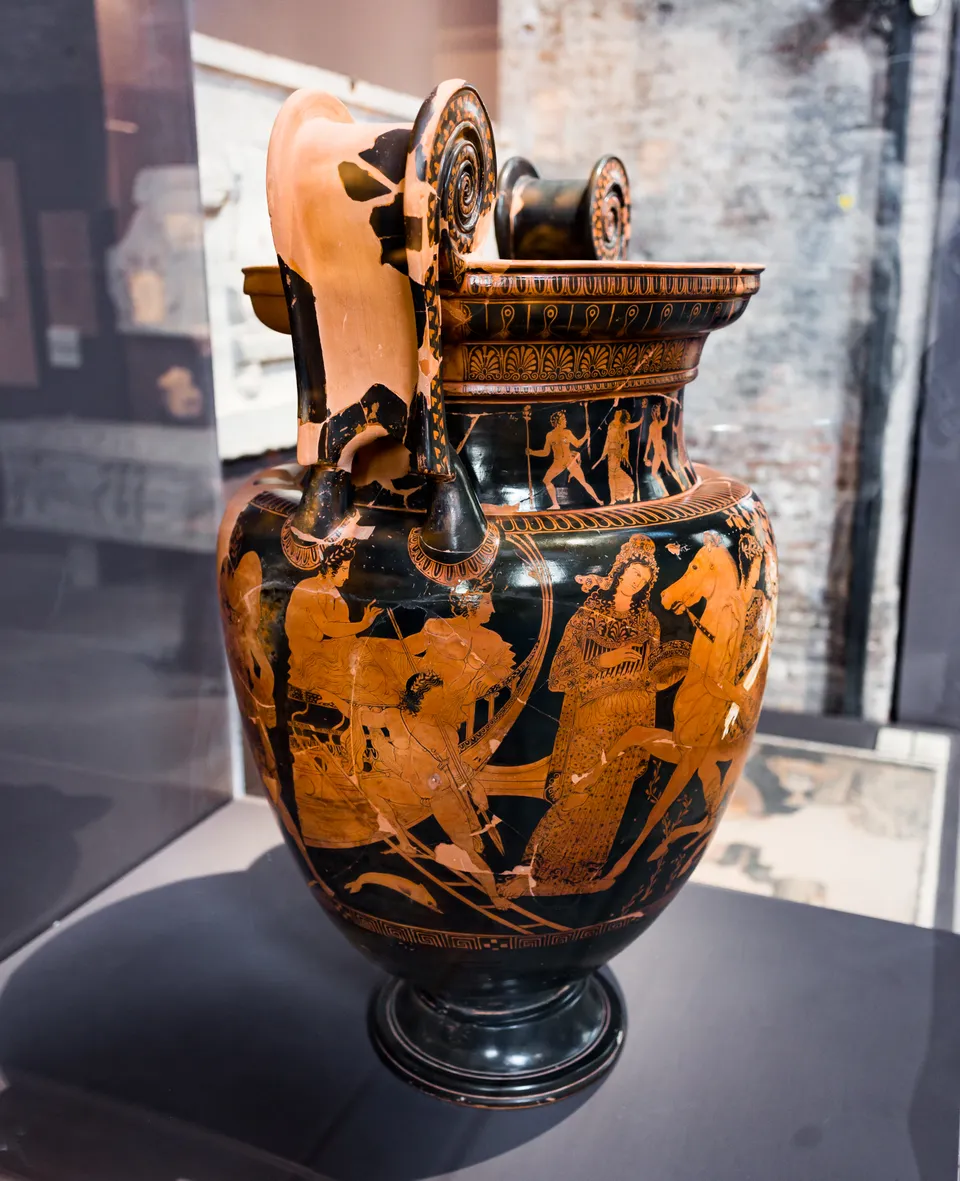
ArchaiOptix · CC BY-SA 4.0 · Source
This Greek myth is told in Book 4 of Apollonius’ Argonautica. With the fleece won, the crew fled Aeëtes’ pursuit by a long way home — up the Danube to the Adriatic in some accounts, or carrying the ship across the Libyan desert in others. As they neared Crete, the bronze giant Talos, who circled the island three times a day, drove them off with boulders.
Talos had a single vein running from neck to ankle, sealed at the end by a bronze nail. When Medea bewitched him with spells, he grazed his ankle on a rock, the nail came out, and he bled to death. Talos is often cited as an ancient imagining of a man-made moving machine — a robot.