Treaty of Nerchinsk
In 1689 Qing China and Russia signed a treaty at Nerchinsk fixing their border along the Stanovoy Range and the Argun River — the first treaty the Qing concluded with a European state on equal terms.
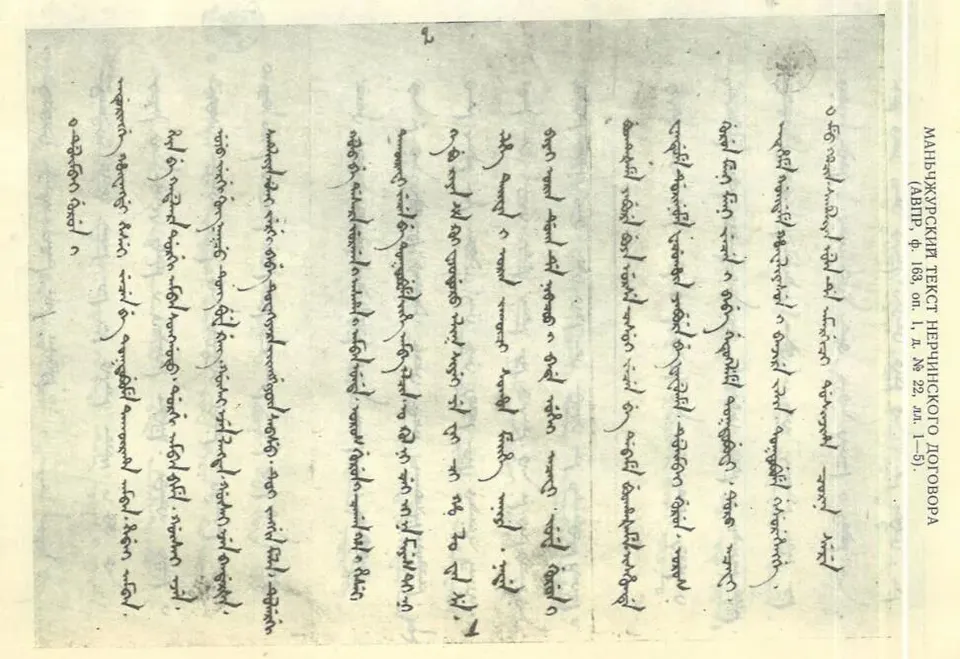
Unknown (goverments of China/Russia) · Public domain · Source
In the seventeenth century Russians in search of furs crossed Siberia down to the Heilong (Amur) River. When they built forts such as Albazin and took tribute from the local peoples, the Qing fought back, and at Qing request Joseon sent musketeers against the Russians in 1654 and 1658 (the Naseon expeditions). After crushing the Three Feudatories, the Qing besieged Albazin in 1685–1686 to press Russia.
In 1689 the two states signed a treaty at Nerchinsk making the Stanovoy Range (Outer Khingan) and the Argun River their border. It was the first treaty the Qing made with a European country as an equal; Jesuit missionaries acted as interpreters and the Latin text was authoritative. Russia withdrew from the Amur basin but gained the right to trade, and the Treaty of Kyakhta (1727) further settled the Mongolian frontier and trade. The lands north of the Amur passed to Russia under the Treaty of Aigun in 1858.