The “Two Hostile States” Line
Also called: Two hostile states theory
Kim Jong Un declared inter-Korean relations to be “relations between two hostile states”, no longer those of one nation. North Korea abolished its agencies for the South and blew up the roads and railways linking the two Koreas.
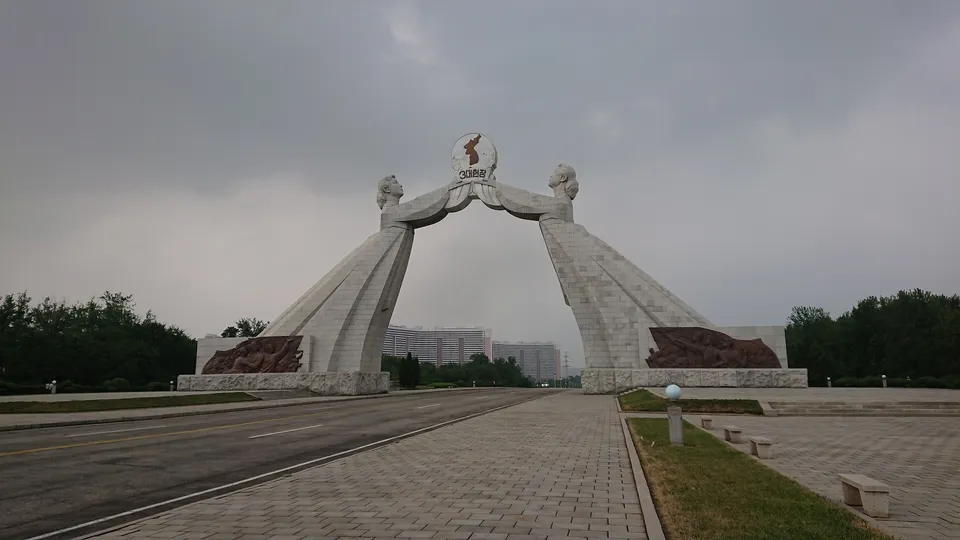
Jan Engelhardt · CC BY-SA 4.0 · Source
At a plenary meeting of the Workers’ Party Central Committee at the end of December 2023, Kim Jong Un said that North–South relations had become “no longer relations of kinship or homogeneity, but relations between two hostile states, two belligerents at war”. In a speech to the Supreme People’s Assembly on 15 January 2024 he called for the constitution to name the Republic of Korea the “primary foe” and to drop references to reunification, and the Assembly abolished the Committee for the Peaceful Reunification of the Fatherland, the National Economic Cooperation Bureau and the Kumgangsan International Tourism Administration. The Monument to the Three Charters for National Reunification in Pyongyang was torn down.
On 15 October 2024 North Korea blew up sections of the Gyeongui and Donghae (East Sea) line roads and railways connecting the two Koreas north of the Military Demarcation Line, and two days later said that its constitution defined the Republic of Korea as a “hostile state”. The party rules revised at the 9th Party Congress in February 2026 also removed phrases such as peaceful reunification of the fatherland and great national unity. North Korea had itself abandoned the “special relationship formed provisionally in the process toward unification” defined in the Inter-Korean Basic Agreement of 1991.