Wars of the Roses
Also called: Battle of Bosworth, Tudor dynasty
From 1455 to 1485 the English houses of Lancaster (red rose) and York (white rose) fought for the crown. It ended when Henry VII founded the Tudor dynasty.
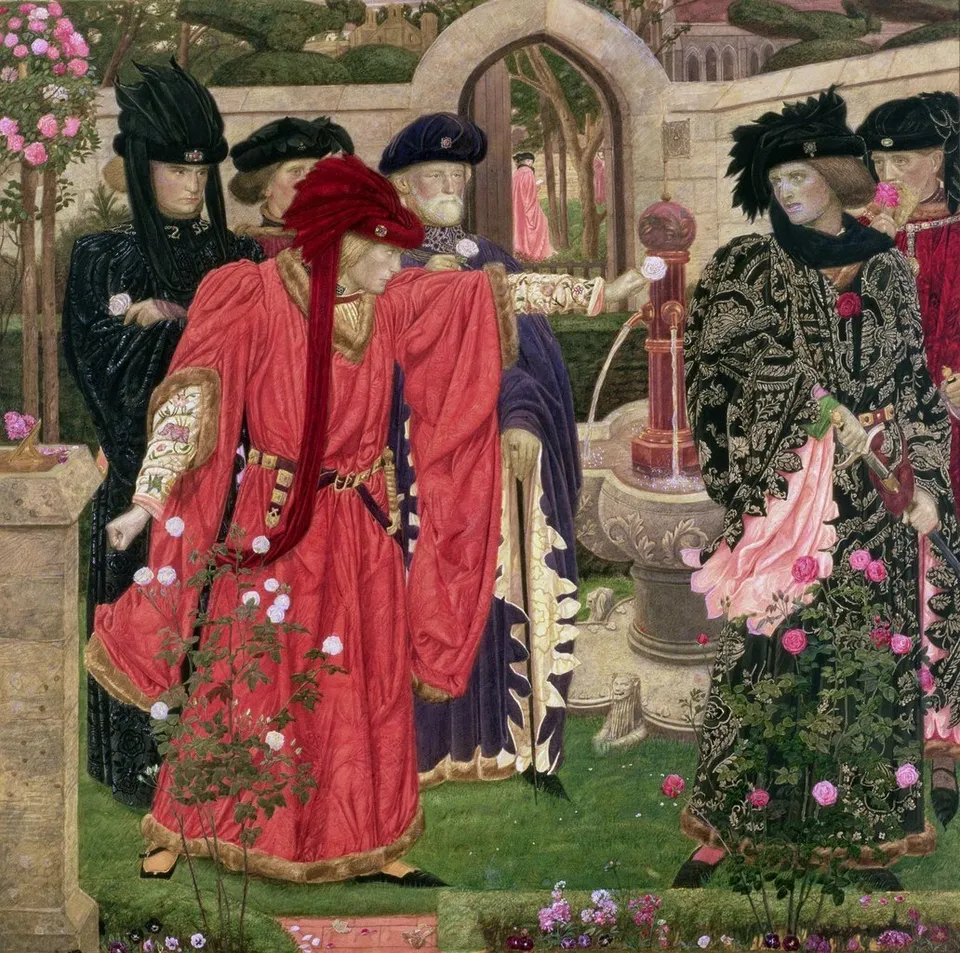
Henry Arthur Payne (1868–1940) · Public domain · Source
Nobles returning defeated from the Hundred Years’ War quarrelled under the feeble Lancastrian king Henry VI, and Richard, Duke of York, reached for the crown; civil war began with the Battle of St Albans in 1455. Over thirty years the two houses made and unmade kings several times. On 22 August 1485 the Lancastrian Henry Tudor killed the Yorkist Richard III at the Battle of Bosworth and took the throne as Henry VII, then married Elizabeth of York to unite the two houses. The name “Wars of the Roses”, taken from the houses’ emblems, was given later.
Many nobles were killed or ruined in the wars, and Henry VII curbed those who remained through courts such as the Star Chamber, building the strong Tudor monarchy that opened the way to absolutism. In 1455, as the wars began, King Sejo seized the throne of Danjong in Joseon, and in 1485, as they ended, the Gyeongguk daejeon (National Code) took effect.