Young Turk Revolution
Also called: Second Constitutional Era, Committee of Union and Progress
Young officers and intellectuals of the Committee of Union and Progress rose and forced Sultan Abdulhamid II to restore the Midhat constitution. The next year they deposed him.
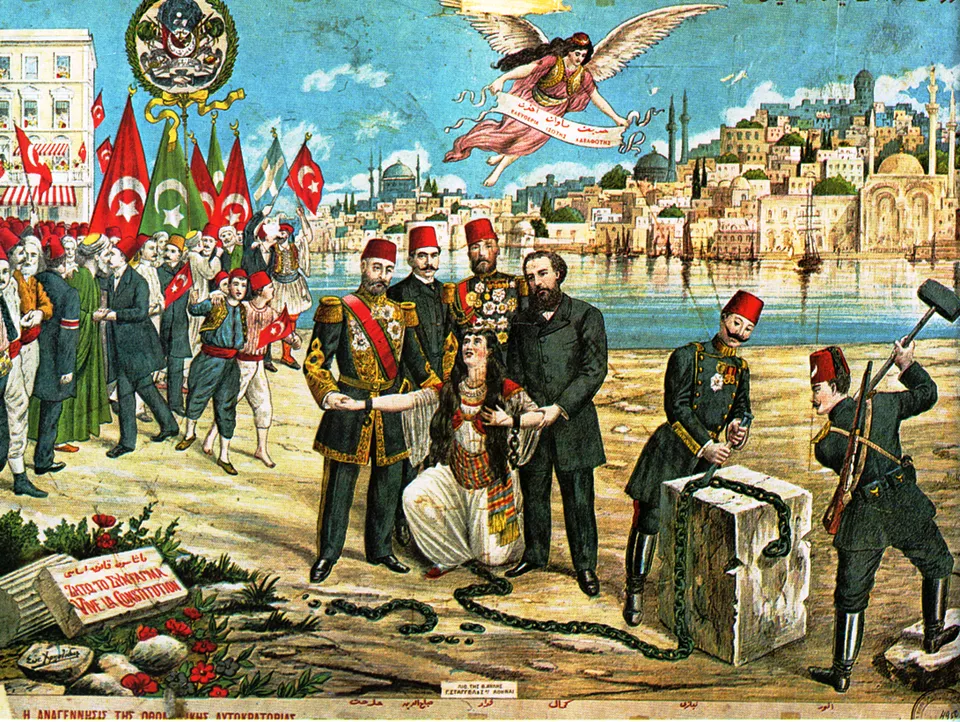
Sotiris Christidis · Public domain · Source
Under Abdulhamid II’s autocracy, Western-educated young officers and intellectuals formed the secret Committee of Union and Progress (the Young Turks). In July 1908 officers of the army in Macedonia rebelled, and on 24 July the sultan restored the constitution suspended for thirty years and reopened parliament. When a counter-revolution broke out in April 1909, the Young Turks crushed it and deposed the sultan.
Yet amid the turmoil Bulgaria declared independence and Austria annexed Bosnia-Herzegovina in 1908, and further territory was lost in the Italo-Turkish War (1911) and the Balkan Wars (1912–1913). Once in power the Young Turks stressed Turkish nationalism, provoking an Arab nationalist reaction, and took the empire into the First World War on Germany’s side.