Yuan Shikai’s Dictatorship and the Warlord Era
Also called: Hongxian Empire, Second Revolution, National Protection War
Having taken over the provisional presidency, Yuan Shikai crushed the Nationalist Party and tried to make himself emperor; after his failure and death China fell into an age of rival regional warlords.
Unknown author · Public domain · Source
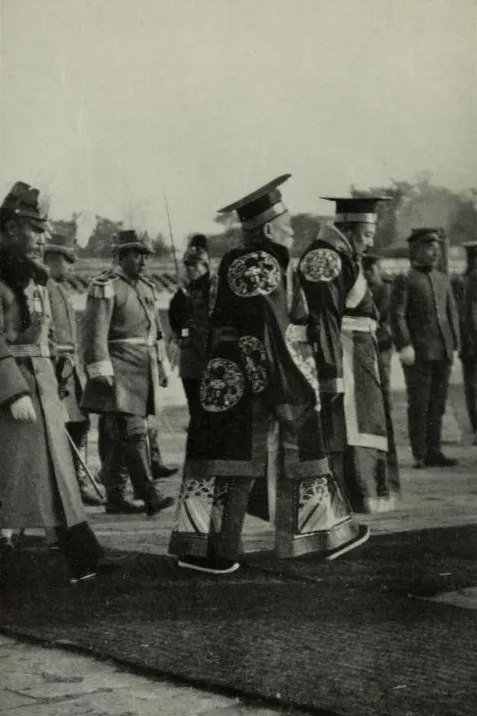
After the 1911 Revolution Yuan Shikai kept the capital in Beijing and enlarged the president’s power. When the Nationalist Party won the first parliamentary election in 1913, Song Jiaoren, who championed cabinet government, was shot at Shanghai station, and the “Second Revolution” launched by Sun Yat-sen and others was quickly crushed. Yuan dissolved the Nationalist Party, suspended parliament and in 1914 issued a new provisional constitution that greatly widened his powers.
In December 1915 he moved to take the throne, renaming the state the Empire of China with the reign title Hongxian. But Cai E and others in Yunnan launched the National Protection War, province after province declared independence, and Japan and other powers objected; in March 1916 he abandoned the monarchy, and in June he died of illness.
The Beijing government then passed between Beiyang warlord cliques — Anhui, Zhili and Fengtian — while in the south Sun Yat-sen led a movement to protect the constitution from Guangzhou. The warlords fought with loans and support from the powers, and the division lasted until the Northern Expedition (1926–1928).