| Politics, 1910s | Yuan’s dictatorship → warlords | Taishō crisis (1913) | Military rule; gendarmerie police |
|---|
| First World War | Accepts 21 Demands (1915) | Takes Qingdao; 21 Demands | Land survey; Company Law |
|---|
| Ideas and culture | New Culture — New Youth | Yoshino’s minponshugi | Self-strengthening; socialism |
|---|
| Rice and food | Countryside ruined by warlords | Rice Riots (1918) → Hara | Rice production plan (1920) |
|---|
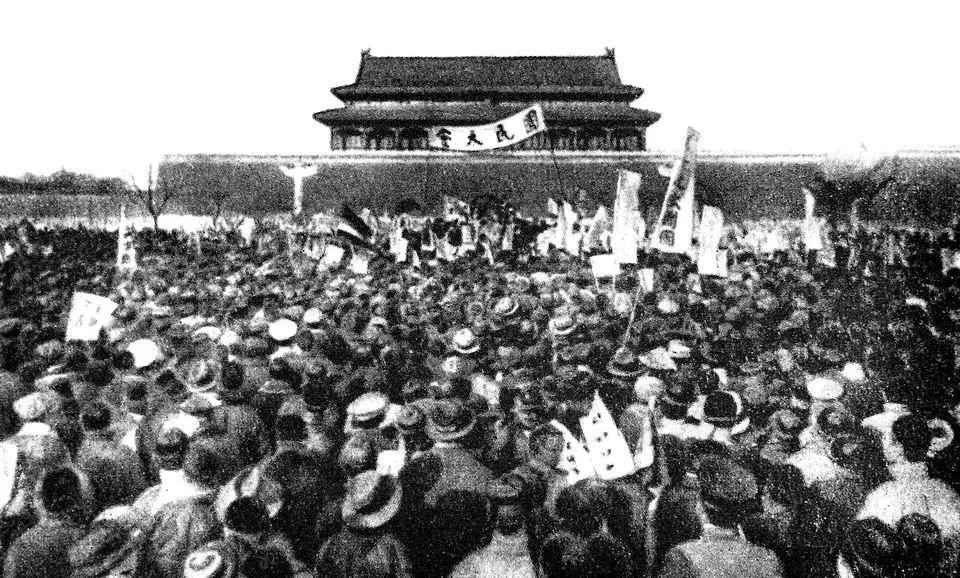
| 1919 | May Fourth; rejects Versailles | Wins Shandong at Paris | March First → Provisional Gov. |
|---|
| Communist parties | CCP founded (1921) | JCP (1922), illegal | Korean CP (1925) |
|---|
| 1923 | Sun turns to Moscow | Great Kantō earthquake | Massacre of Koreans |
|---|
| 1925 | May Thirtieth Movement | Universal suffrage; Peace Law | Peace Preservation Law applied |
|---|
| United fronts | First United Front (1924) | — (communists suppressed) | Singanhoe (1927) |
|---|
| 1926–1928 | Northern Expedition; Nanjing gov. | Shandong expedition; Zhang Zuolin | June Tenth (1926); Singanhoe |
|---|
| Manchuria (1931) | Appeals to League | Kwantung Army blows railway | Joint Korean–Chinese campaigns |
|---|
| Manchukuo and the League | Lytton Report sides with China | Manchukuo; quits League (1933) | Yun Bong-gil attack (1932) |
|---|
| Mid-1930s | Anti-communist drive; Long March | May 15 & Feb. 26 — army rises | Supply base; Revolutionary Party |
|---|
| War in China (1937) | Xi’an → Second United Front | Marco Polo Bridge; Mobilization | Imperial-subject policy; KVC |
|---|
| 1940s | Chongqing resists; Wang regime | Co-Prosperity Sphere → Pacific War | Liberation Army; war on Japan |
|---|
| After 1945 | Civil war → PRC (1949) | Surrender; Allied occupation | Liberation → division (1948) |
|---|