Abdication of the Xuantong Emperor
Also called: Fall of the Qing, Abdication of Puyi
On 12 February 1912 Empress Dowager Longyu issued the abdication edict in the name of the six-year-old Xuantong Emperor, Puyi, ending the 268-year Qing dynasty and more than 2,000 years of imperial rule. The next day Sun Yat-sen stepped down and Yuan Shikai became provisional president.
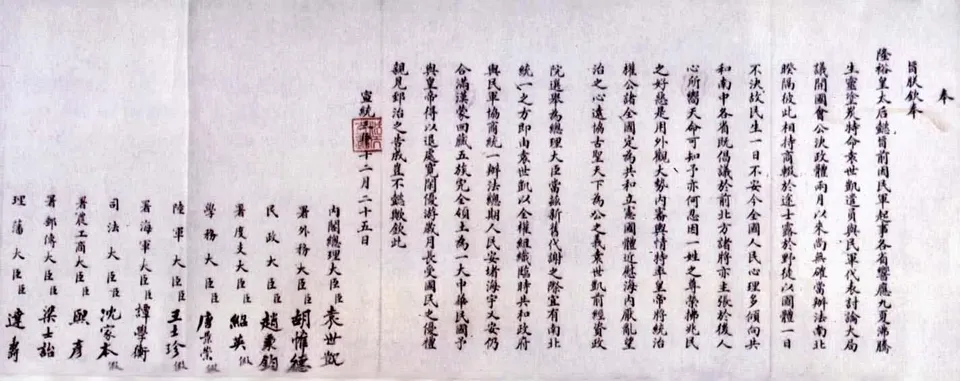
清遜帝 · Public domain · Source
Sun Yat-sen had taken office as provisional president of the Republic of China in Nanjing on 1 January 1912, but Beijing still held an emperor and the Beiyang Army. Sun promised Yuan Shikai the presidency if he brought about the emperor’s abdication. Yuan had the Beiyang generals wire demands for a republic, and won over Empress Dowager Longyu with generous terms for the imperial house.
The edict came on 12 February. Puyi was to keep the title of emperor, receive 4 million taels a year and live for the time being in the Forbidden City. Sun resigned on 13 February, and on 10 March Yuan was sworn in as provisional president in Beijing. The next day the Senate in Nanjing promulgated a Provisional Constitution with cabinet government, meant to rein in the president.
Outer Mongolia and Tibet broke away, holding that they had owed allegiance to the Qing emperor, not to the Republic.