Abolition of Feudalism (Night of 4 August)
Also called: August Decrees, Night of 4 August, Great Fear
Alarmed by risings in the countryside, the National Assembly voted in an all-night session to abolish seigneurial privileges, tithes and the sale of offices.
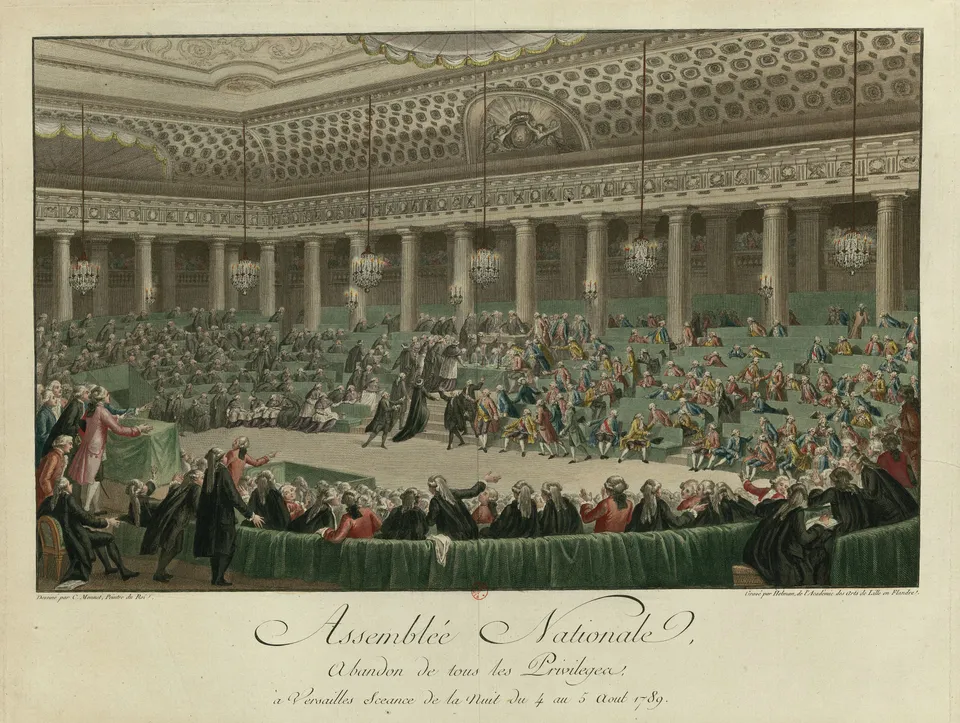
Charles Monnet / Isidore Helman (graveur) · Public domain · Source
After the fall of the Bastille rumours spread through the countryside that nobles were sending brigands against the peasants (the Great Fear), and peasants attacked châteaux and burned manorial records. The Assembly chose concession over repression. On the night of 4 August 1789 liberal nobles such as the Vicomte de Noailles and the Duc d’Aiguillon led the way in renouncing privileges, and deputy after deputy rose to give up the privileges of orders and provinces.
The decrees finalised by 11 August (the August Decrees) abolished serfdom, seigneurial courts, church tithes, the sale of offices and tax privileges, and opened public office to all citizens. Seigneurial dues attached to land, however, had to be bought out; they were abolished without compensation only in 1793.