Exploration14 December 1911

Amundsen Reaches the South Pole

The Norwegian Roald Amundsen and four companions became the first people to reach the South Pole, by dog sledge. Britain’s Scott and his party, arriving a month later, all died on the way back.
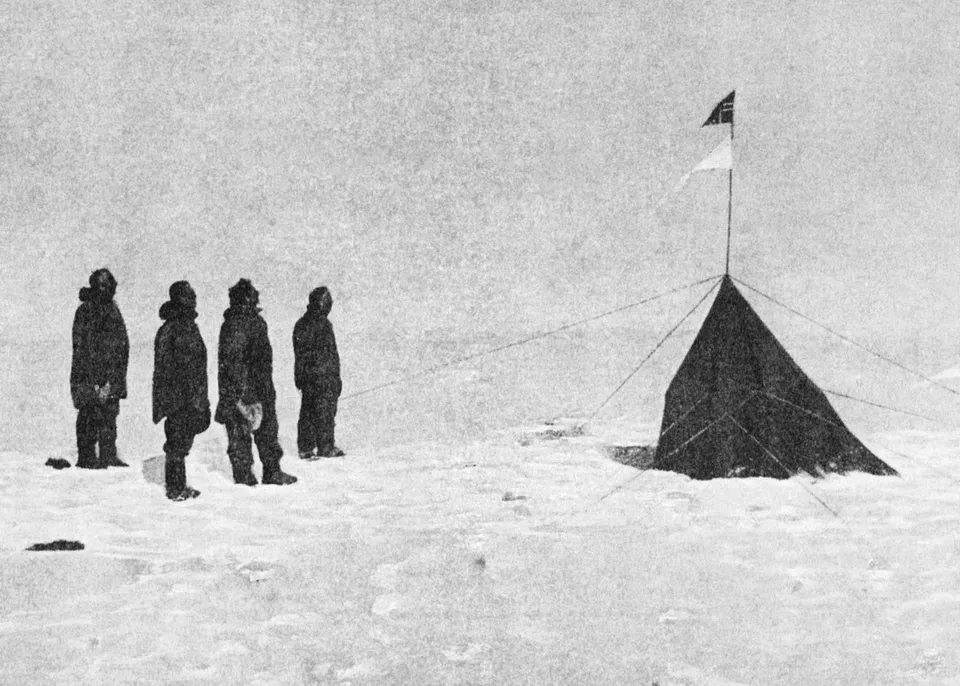
Amundsen’s party at the Polheim tent with the Norwegian flag, South Pole (December 1911)

Olav Bjaaland · Public domain · Source

Amundsen left Norway in 1910 saying he was bound for the Arctic, then turned for Antarctica at sea. From his base, Framheim, at the Bay of Whales on the Ross Ice Shelf, he set out in October 1911 with four companions and sledges drawn by 52 dogs, climbed the Axel Heiberg Glacier and reached the South Pole on 14 December. They pitched a tent, Polheim, and planted the Norwegian flag.

Robert Scott’s British party, racing for the same goal, reached the pole on 17 January 1912 to find Amundsen’s tent, and all five died of cold and hunger on the return. It was some forty years after Captain Nemo planted his black flag at the pole in Twenty Thousand Leagues Under the Seas.
The map in 1911

OpenFreeMap © OpenMapTiles © OpenStreetMap contributors

States at the time
Norway

People

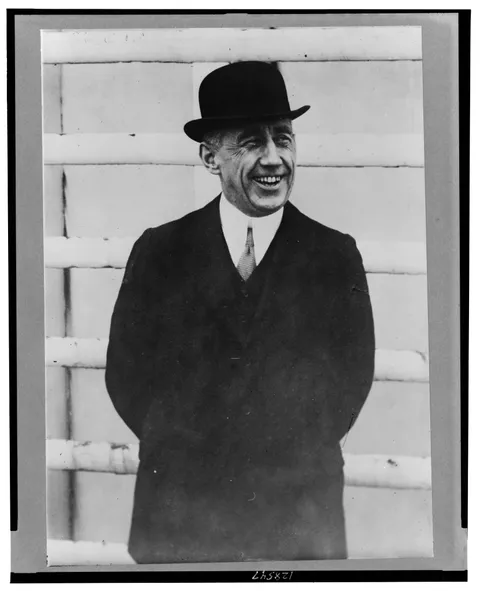
  • Roald Amundsen1872 – 1928

    key figure · Norwegian polar explorer, first to sail the Northwest Passage and, on 14 December 1911, the first person to reach the South Pole; lost in the Arctic in 1928 while flying to search for missing colleagues

Before and after

Themes that include this event

  • Twenty Thousand Leagues Under the Seas1702 – 1958

    Jules Verne’s novel of Captain Nemo’s submarine Nautilus circling the world beneath the sea — the treasure ships of Vigo Bay, La Pérouse’s wrecks, the giant squid and the Atlantic cable behind it, and the people who really reached the South Pole and passed under the North Pole after the novel went there first