The Oseberg Ship Burial
Also called: Oseberg ship, Osebergskipet
In the autumn of 834 two women were buried in a Viking ship some 21.5 m long beneath a great mound at Oseberg in southern Norway. Excavated in 1904, the ship and its grave goods — a cart, sledges, textiles and more — are the richest witness to Viking Age burial and beliefs about the afterlife.
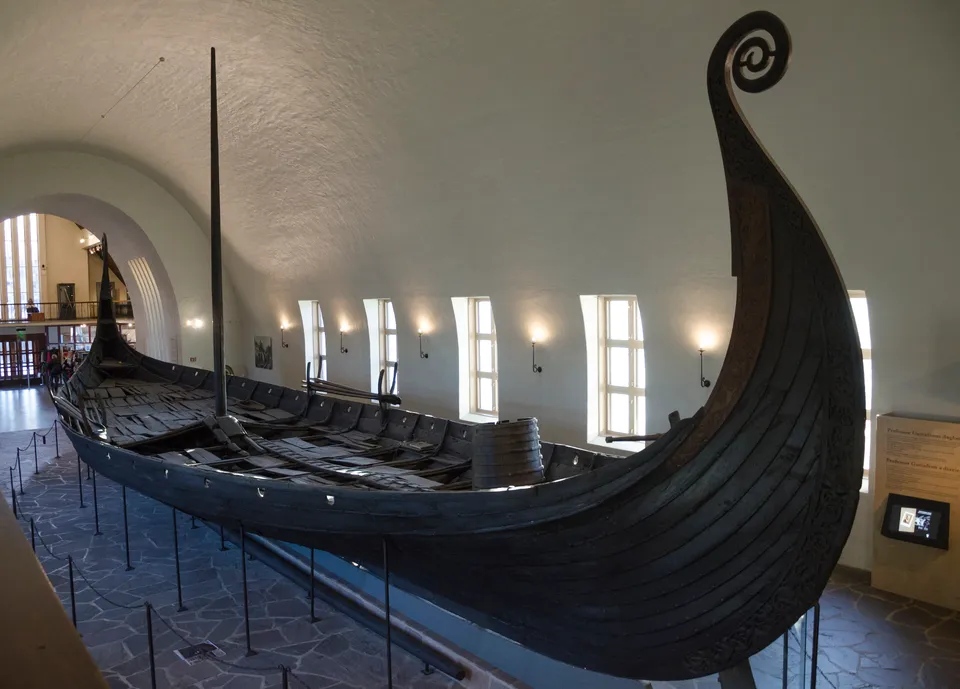
Petter Ulleland · CC BY-SA 4.0 · Source
In 1904 the Swedish archaeologist Gabriel Gustafson and the Norwegian archaeologist Haakon Shetelig excavated a ship from a large mound on the Oseberg farm north of Tønsberg, west of the Oslofjord. Sealed in clay, the wood was well preserved, and tree rings from the burial chamber show that the burial took place in the autumn of 834. The oak ship is about 21.5 m long, with prow and stern richly carved with animal ornament.
The burial chamber held the bones of an older woman and a younger one, buried with a richly carved cart, four sledges, beds, a loom, kitchen gear and animals including horses, cattle and dogs. Fragments of a tapestry showing a procession of people and wagons were found, read by some as a cult procession. The grave had been robbed early, so jewellery and precious metal are almost absent. Who the two women were is unknown; some see them as high-ranking women or priestesses.
Ship burial is often read as reflecting a belief that the dead journeyed to another world, but how that belief related to the Valhalla or the realm of Hel described in the Eddas cannot be known for lack of records. The ship was displayed at the Viking Ship Museum on Bygdøy in Oslo, which is being rebuilt as the new Museum of the Viking Age.