Television from the Moon
Also called: Apollo 11 broadcast
On 21 July 1969 (UTC) Armstrong’s first step onto the Moon was broadcast live and watched by some 600 million people, about a fifth of the world. The signal was received at Honeysuckle Creek and Parkes in Australia.
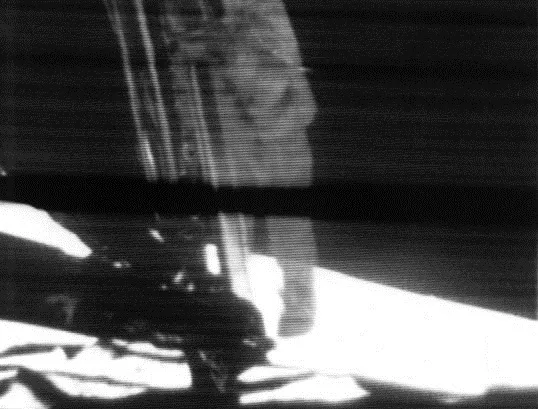
National Aeronautics and Space Administration · Public domain · Source
The television camera on the ladder of the lunar module Eagle sent black-and-white pictures at ten frames a second. The Moon was then over the Pacific side of the Earth, so antennas at Goldstone in the US and Honeysuckle Creek and Parkes in Australia all received the signal. The first pictures of Armstrong coming down the ladder that went out to the world were Honeysuckle Creek’s, which were clearer; minutes later the feed switched to the 64 m Parkes radio telescope.
Some 600 million people, about a fifth of the world’s population, are thought to have watched live. Koreans watched too, and the government made the day (21 July, Korean time) a special public holiday. President Nixon spoke by telephone from the White House with the two men on the Moon.