Science24 July 1969

Apollo 11 splashdown

On 24 July 1969 Apollo 11’s command module Columbia splashed down in the North Pacific. The three astronauts were taken aboard the carrier USS Hornet and, quarantined against lunar germs, met President Nixon.
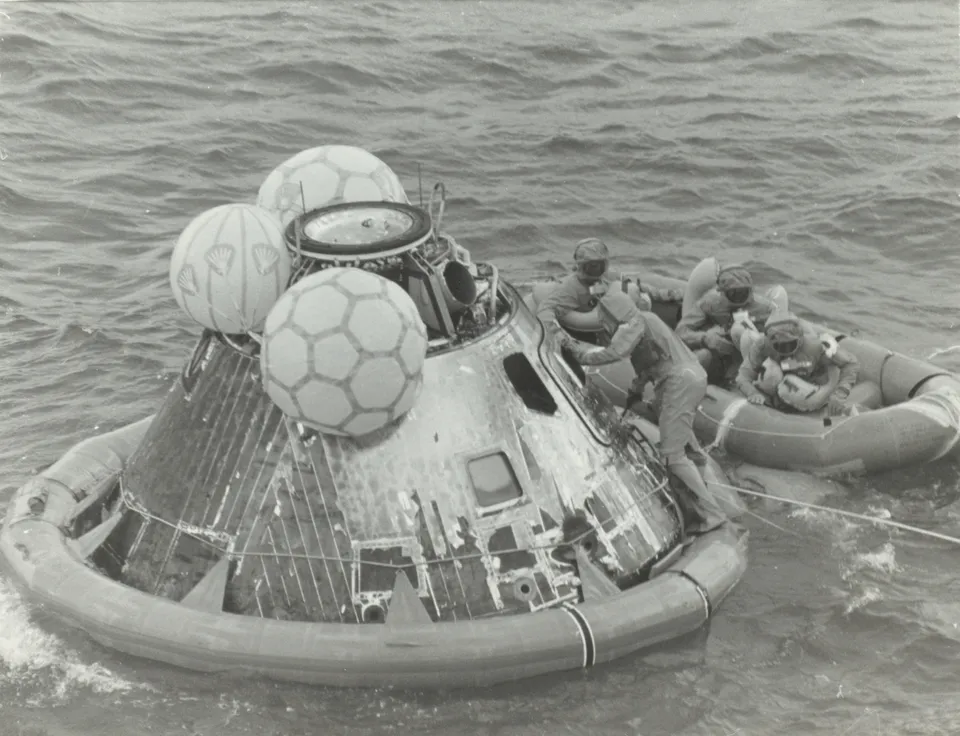
The crew in a life raft after splashdown, wearing biological isolation garments

National Aeronautics and Space Administration (NASA) · CC0 · Source

On 24 July at 16:50 UTC, three days after leaving the Moon, Columbia came down 2,660 km east of Wake Island, 24 km from the carrier USS Hornet. Divers handed the crew biological isolation garments and wiped them down with disinfectant, in case they had brought back unknown germs from the Moon.

The three entered a Mobile Quarantine Facility aboard Hornet and met President Nixon through its window. “As a result of what you’ve done,” he said, “the world has never been closer together before.” The quarantine continued in Houston and was lifted on 10 August. The 21.5 kg of rock and soil they brought back is still being studied.
The map in 1969

OpenFreeMap © OpenMapTiles © OpenStreetMap contributors

States and rulers at the time
United States — President Richard Nixon
Places
Apollo 11 splashdown site

People

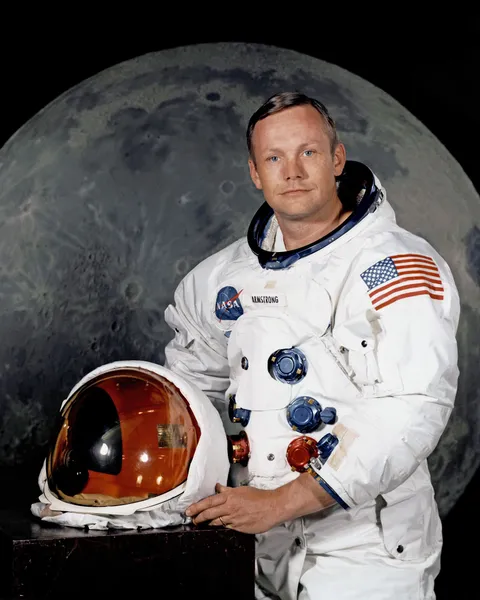
  • Neil Armstrong1930 – 2012

    commander · American astronaut, commander of Apollo 11, who on 21 July 1969 (UTC) became the first person to step onto the Moon

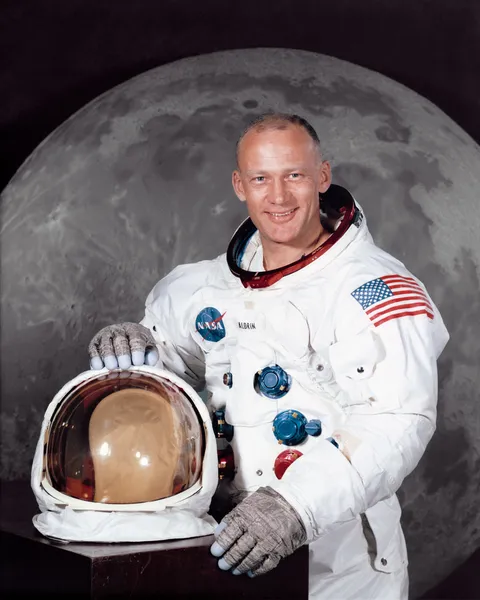
  • Buzz Aldrin1930

    participant · American astronaut, Apollo 11’s lunar module pilot, the second person to walk on the Moon after Armstrong

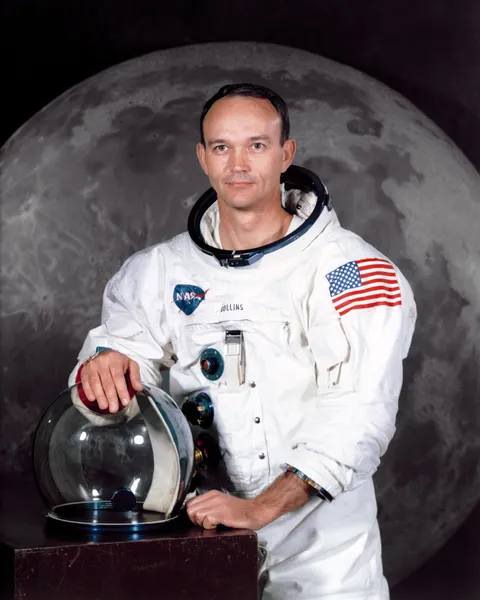
  • Michael Collins1930 – 2021

    participant · American astronaut, Apollo 11’s command module pilot, who circled the Moon alone in Columbia while the other two were on the surface

Before and after

Themes that include this event

  • Space Exploration1957 – 1970

    From Sputnik, the first artificial satellite, to Apollo 11’s first landing on the Moon and Apollo 13’s return from behind it — the paths of those who left the Earth