Science11–17 April 1970

Apollo 13

Also called: Apollo XIII

In April 1970 America’s Apollo 13, on its way to the Moon, lost an oxygen tank in an explosion on its third night, gave up the landing, swung around the Moon using the lunar module as a lifeboat, and brought all three men home on 17 April.
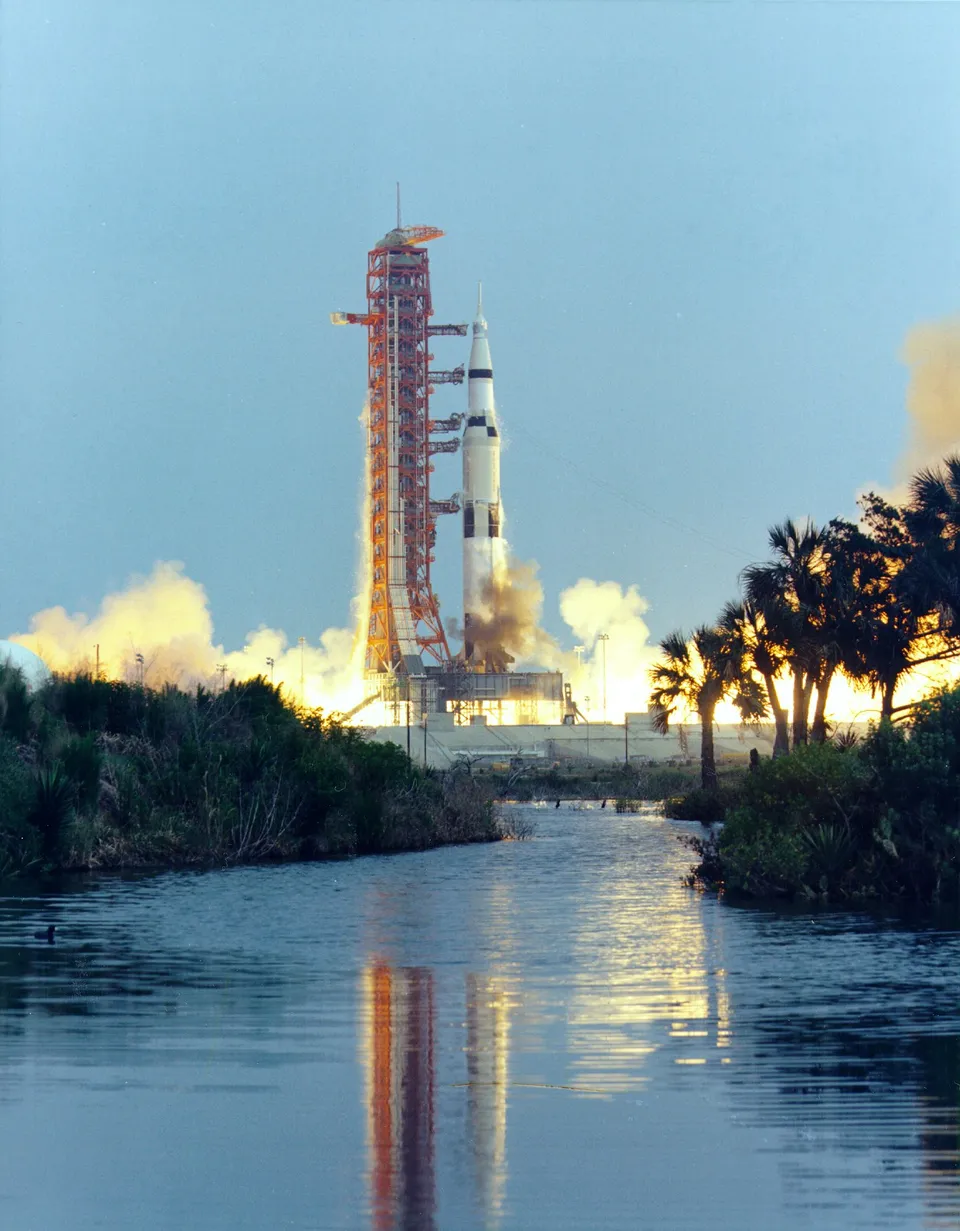
Saturn V lifting off with Apollo 13 — Kennedy Space Center, 11 April 1970

NASA · Public domain · Source

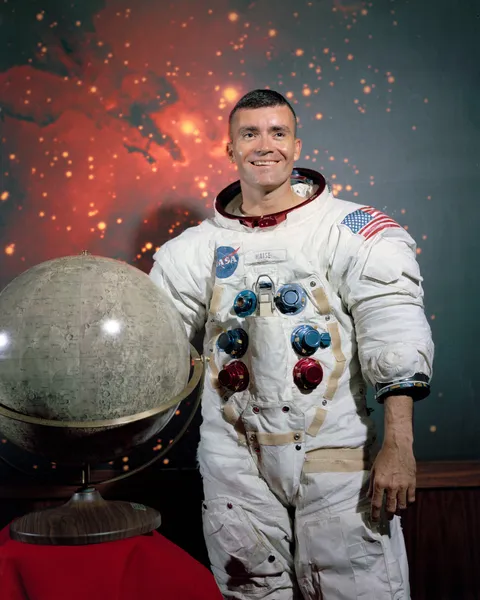
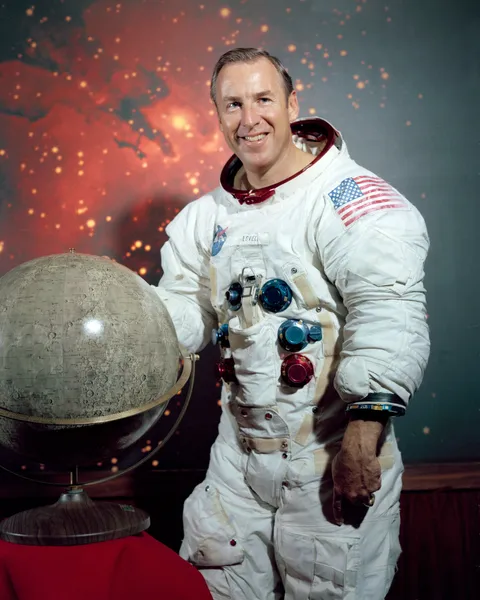
Apollo 13 was to be the third crewed Moon landing. Commander Jim Lovell, command module pilot Jack Swigert and lunar module pilot Fred Haise left Kennedy Space Center on 11 April 1970. The command and service module was named Odyssey, the lunar module Aquarius; their target was the Fra Mauro highlands.

At 55 hours 54 minutes into the flight, nearly 330,000 km from Earth, oxygen tank No. 2 in the service module exploded — oxygen for breathing and for the fuel cells that made the ship’s power. The command module had to be shut down to save its re-entry batteries, and the three men moved into a lunar module built to keep two men alive for two days, and held out there for four. Mission Control in Houston planned a route around the Moon using the undamaged lander’s engine, and read up instructions for joining a carbon dioxide filter to the lander with plastic, cardboard and tape.

On 17 April the command module splashed down in the South Pacific. The review board found that during ground tests before launch the tank’s thermostatic switches had welded shut under the wrong voltage, damaging the insulation on its wiring. Apollo 13 never reached the Moon’s surface, but is remembered as a “successful failure”.
The map in 1970

OpenFreeMap © OpenMapTiles © OpenStreetMap contributors

States and rulers at the time
United States — President Richard Nixon
Places
Kennedy Space Center, Mission Control, Houston, Apollo 13 splashdown site

People

  • Jim Lovell1928 – 2025

    commander · American astronaut who flew Gemini 7 and 12 and Apollo 8, then commanded Apollo 13 on his second trip to the Moon — but never landed on it

  • Jack Swigert1931 – 1982

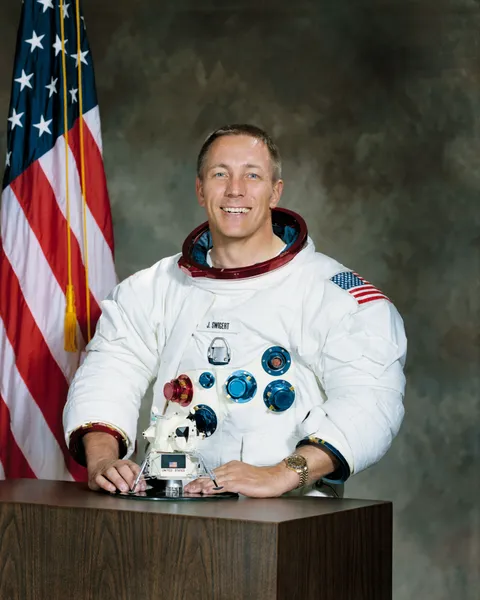
    participant · American astronaut who became Apollo 13’s command module pilot three days before launch, replacing Ken Mattingly after a rubella exposure; elected to Congress in 1982, he died before taking office

  • Fred Haise1933

    participant · American astronaut, Apollo 13’s lunar module pilot, who after missing the Moon went on to fly the Space Shuttle’s approach and landing tests

  • Gene Kranz1933

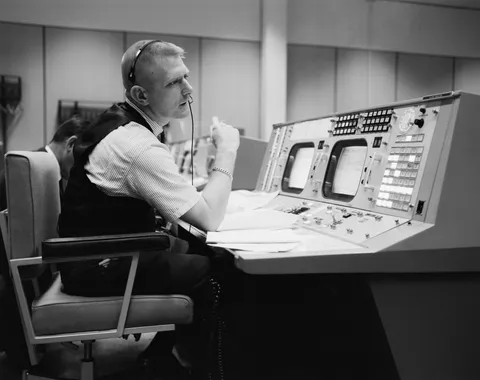
    key figure · NASA flight director who led Mission Control’s “White Team” when Apollo 13’s accident struck, and planned the way to bring the three men home

2 parts of this event

  1. 1

    At 03:08 UTC on 14 April 1970 (the night of the 13th in Houston) an oxygen tank exploded in the service module of Apollo 13 on its way to the Moon. Mission Control and the three astronauts found a way home using the lunar module as a lifeboat.

  2. 2

    On 17 April 1970 Apollo 13’s command module Odyssey splashed down in the South Pacific. The three astronauts were taken aboard the assault ship USS Iwo Jima, 6.5 km away.

Before and after

Themes that include this event

  • Space Exploration1957 – 1970

    From Sputnik, the first artificial satellite, to Apollo 11’s first landing on the Moon and Apollo 13’s return from behind it — the paths of those who left the Earth