“Houston, we’ve had a problem”
Also called: Houston, we have a problem, Apollo 13 accident
At 03:08 UTC on 14 April 1970 (the night of the 13th in Houston) an oxygen tank exploded in the service module of Apollo 13 on its way to the Moon. Mission Control and the three astronauts found a way home using the lunar module as a lifeboat.
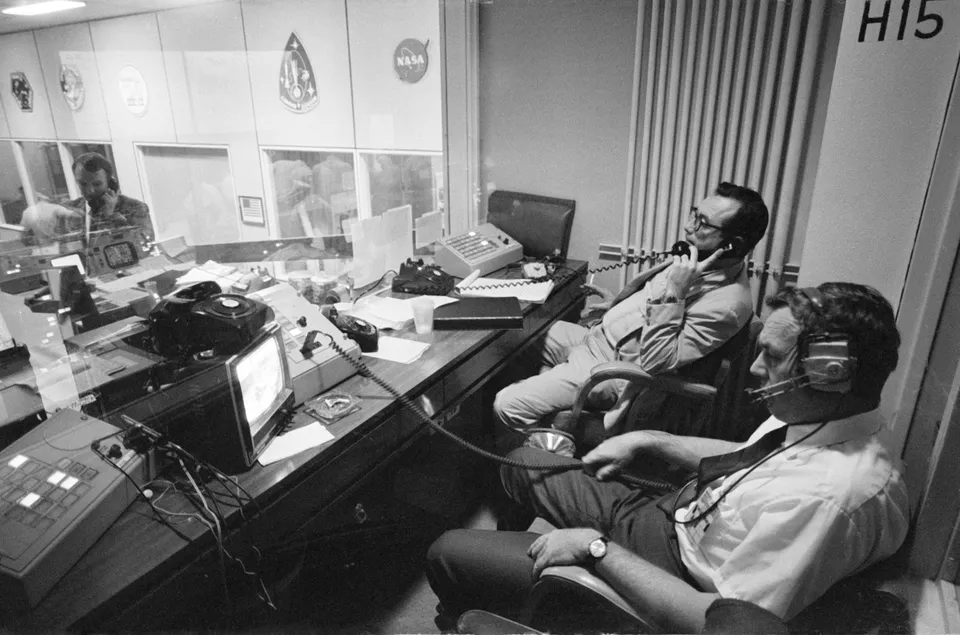
NASA Johnson Space Center · Public domain · Source
At 55 hours 54 minutes, minutes after a television broadcast, Jack Swigert switched on the fans that stirred the oxygen tanks at Mission Control’s request. About ninety seconds later came “a pretty large bang”. Swigert reported, “Okay, Houston, we’ve had a problem here,” and Jim Lovell added, “We’ve had a Main B Bus undervolt.” Outside the window gas was venting into space. Tank No. 2 had exploded, blowing off a panel of the service module, and tank No. 1 was leaking too.
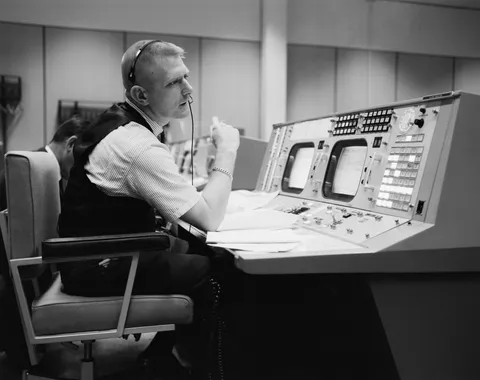
Without oxygen the fuel cells could make no power. Flight director Gene Kranz’s team had the command module shut down to save its re-entry batteries and moved the three men into the lunar module Aquarius, built for two men for two days. The service module’s big engine might be damaged, so instead the lander’s engine would take them around the Moon and home.
The lander’s carbon dioxide canisters were meant for two men for less than two days, and the command module’s plentiful ones were square and would not fit its round sockets. Engineers in Houston worked out how to join them with plastic covers, cardboard and duct tape from on board, and read the procedure up for an hour. With the “mailbox”, as it was called, the carbon dioxide fell again.