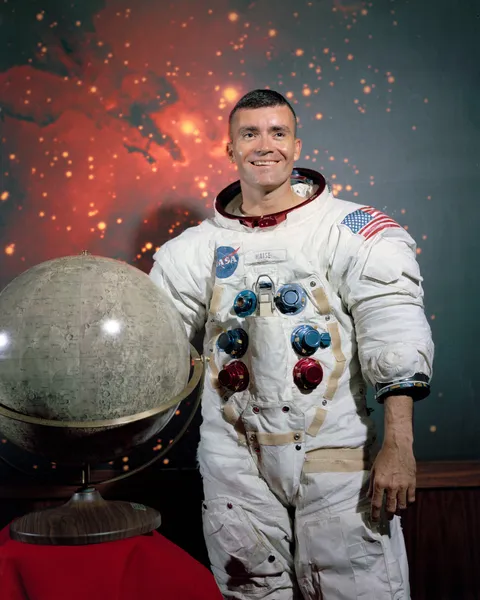
Apollo 13 splashdown
On 17 April 1970 Apollo 13’s command module Odyssey splashed down in the South Pacific. The three astronauts were taken aboard the assault ship USS Iwo Jima, 6.5 km away.
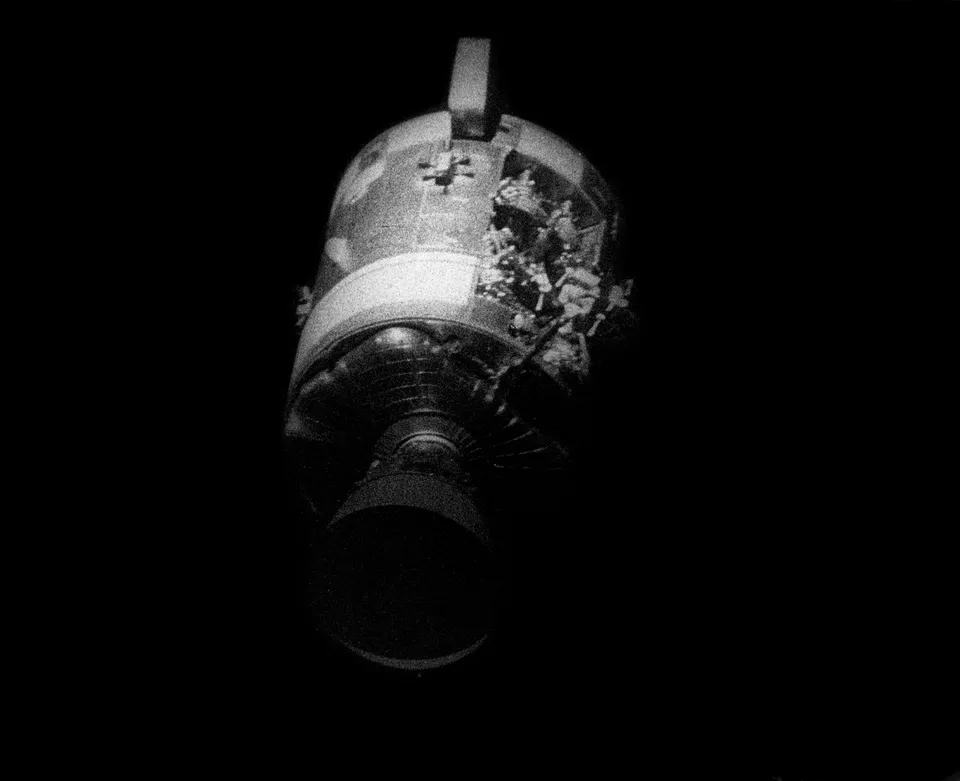
NASA Scan by Kipp Teague · Public domain · Source
On the four-day return the lander cooled to 3 °C, and the crew made do with about 200 ml of water each a day. Some four and a half hours before reaching Earth they released the service module and saw it for the first time: a whole panel blown away and its insides exposed. About three and a half hours later they let go of Aquarius, the lander that had kept them alive.
The long-dormant command module was powered up again, and on entering the atmosphere the radio blackout, normally four minutes, lasted nearly six. At 18:07 UTC on 17 April the command module came down under three parachutes southeast of American Samoa, and helicopters lifted the crew to the US Navy’s USS Iwo Jima.
Two months later the review board found that the tank’s thermostatic switches, rated for 28 volts, had been fed 65 volts during ground tests before launch and welded shut, letting the inside of the tank heat to hundreds of degrees and damaging the insulation on its wiring. With the tank redesigned, Apollo returned to the Moon with Apollo 14 in 1971.