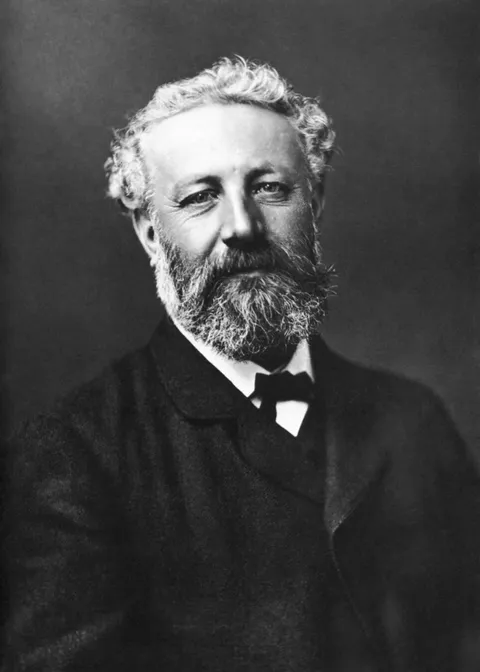
Jules Verne’s Around the World in Eighty Days
Also called: Le Tour du monde en quatre-vingts jours
Jules Verne’s novel, in which the London gentleman Phileas Fogg wagers he can circle the globe in eighty days, appeared in a newspaper — a story of the years when the Suez Canal and the transcontinental railroad had just opened.
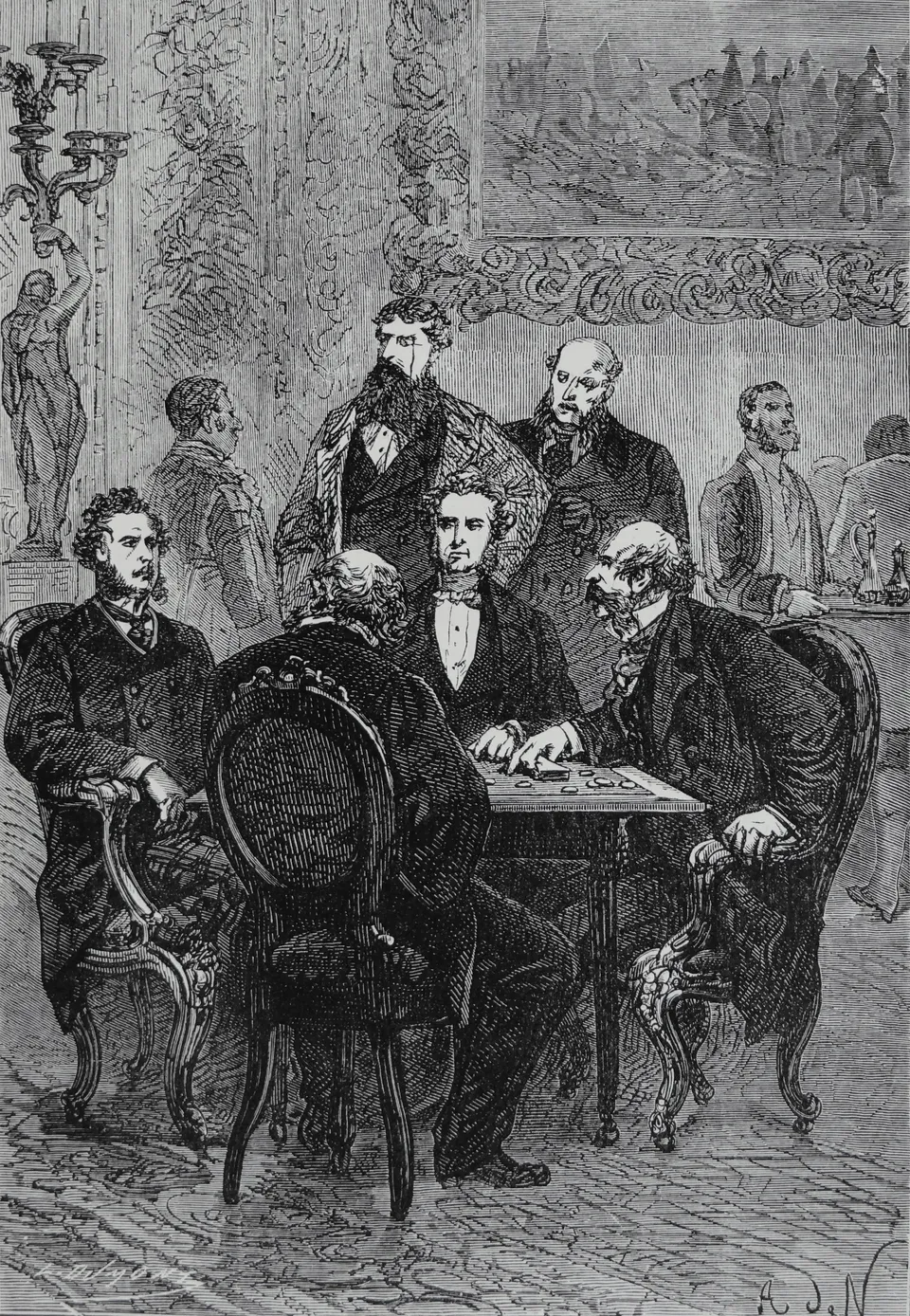
Alphonse de Neuville · Public domain · Source
In 1869 the Suez Canal and America’s transcontinental railroad opened, and the next year Bombay and Calcutta were joined by rail; for the first time a journey around the world shrank to a matter of months. Magazines even printed timetables showing the globe could now be circled in eighty days, and Jules Verne built a novel on the idea.
Serialised in the Paris newspaper Le Temps from 6 November to 22 December 1872, it follows Phileas Fogg of London’s Reform Club, who stakes £20,000 and leaves London with his servant Passepartout on the evening of 2 October. Detective Fix, suspecting him of a bank robbery, gives chase, and with Aouda, a woman rescued in India, they circle the globe by train, ship, elephant and sledge. Famously, Fogg believes he has lost — not realising that by travelling east across the date line he has gained a day — and wins at the last. Published as a book the next year, it became one of the most-read adventure novels in the world.