The Arrow Incident
In October 1856 Qing officials in Canton boarded the Hong Kong-registered lorcha Arrow on suspicion of piracy and seized its crew. Britain bombarded Canton, claiming an insult to its flag, and the Second Opium War began.
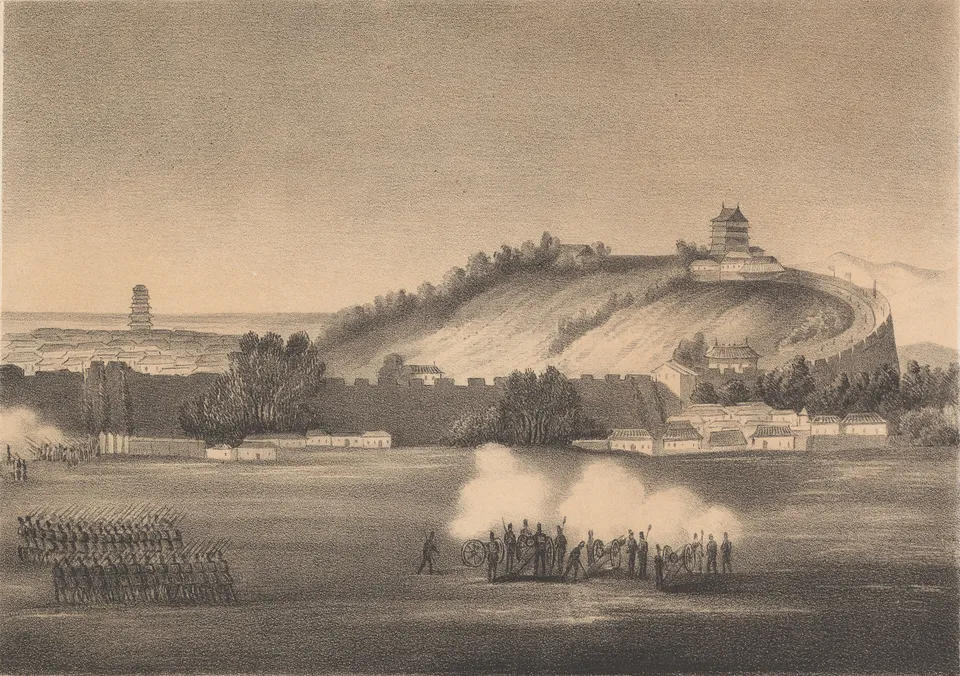
Carl Lancedelli (publisher), Jac. Loder (printer of plates) · Public domain · Source
Even after the Treaty of Nanjing, British goods sold less than hoped, and the people of Canton still kept foreigners out of the walled city. Britain sought to revise the treaty to gain more ports and a minister resident in Beijing.
On 8 October 1856 Qing officials boarded the lorcha Arrow, registered in Hong Kong, on suspicion of piracy and arrested twelve Chinese crewmen. The ship’s registration had already lapsed, but the British consul at Canton, Harry Parkes, claimed an insult to the British flag and demanded an apology and the crew’s return. When the Viceroy Ye Mingchen refused to apologise, the British fleet bombarded Canton.
France joined in, citing the execution of the missionary Auguste Chapdelaine in Guangxi that year. In December 1857 the Anglo-French forces took Canton and captured Ye Mingchen, sending him to Calcutta.